
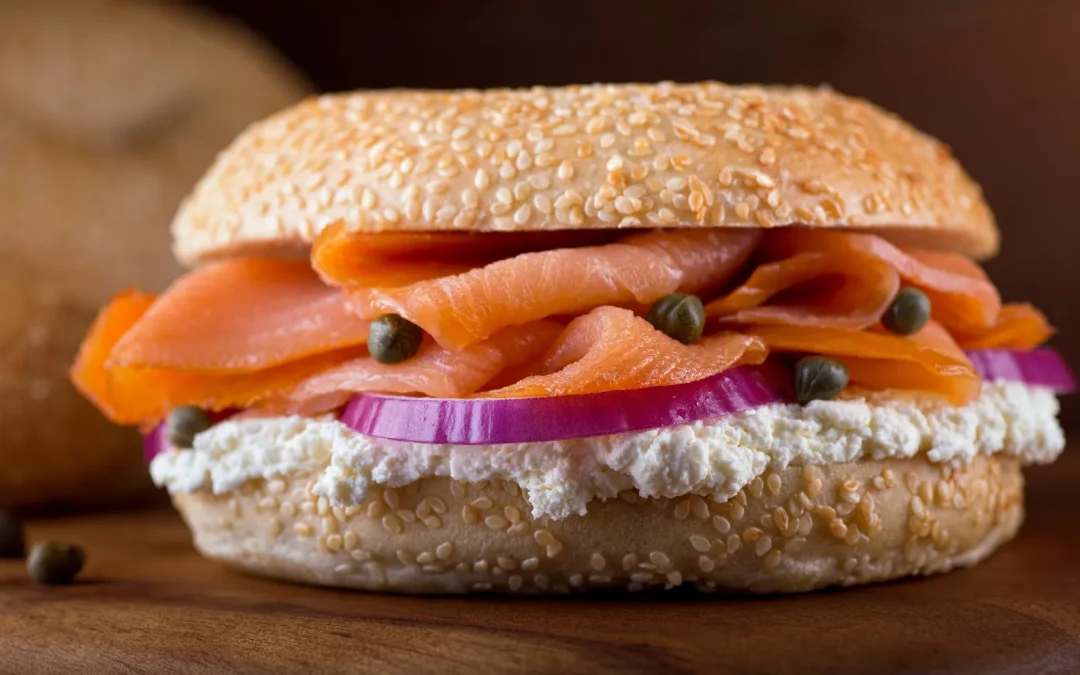
Lox Bagel – My Favorite American Breakfast
Once in a while, I enjoy a typical American breakfast with all the trimmings: bacon, sausage, fried eggs, and the works. But I can’t do it more than twice a week, and it’s a guilt trip. I don’t want to head into the land of obesity, and my palate craves a bit more variety.
Several years ago, on one of my first trips to New York, a Jewish friend who lives next to Central Park invited me for Sunday Brunch at Barney Greengrass (541 Amsterdam Avenue at 86th Street). This is where I had the first lox bagel in my life, and I was immediately sold.
This feeling was reinforced with my second lox bagel experience, which I had at the Knickerbocker Hotel in Chicago, different style of serving but also an outstanding culinary sensation. It had a different presentation but the same ingredients.
The effect on my taste buds was the same: an incredible harmony of the various components.
Since then, lox bagel has become my go-to breakfast whenever I travel to the US.
What is a Lox Bagel?
A lox bagel is a sandwich, centering on smoked salmon, served either closed or open-faced. It's an ideal breakfast that will keep you satiated through the morning. It's also great for brunch.
The list of ingredients reads deceptively simple, and you may underestimate the gourmet potential:
- a toasted bagel
- cream cheese
- smoked salmon, often under the name Nova Lox
- a slice of tomato
- a slice of red onion
- capers
That’s the way I like it best.
Some restaurants add dill or basil leaves. Other additions I have seen are cucumbers, avocado, pickles, and lemons. I like these herbs and veggies, but I don’t want them on a lox bagel. They add an unnecessary level of flavors that distract from the harmony of the main ingredients.
What You Need to Make a Lox Bagel at Home
For the perfect lox bagel, no particular cooking skills are required, and you can easily make it yourself at home. You don't even need a recipe.
Well, the only skill necessary is cutting the bagel horizontally into two halves and toasting it to the ideal light brown color while keeping the chewy interior intact.
But the big challenge to creating a breakfast masterpiece is to get your hands on the best possible ingredients, as the quality of the lox bagel hinges on the quality of its components and their synergy:
Bagel
The greatest challenge is probably getting fresh bagels. You are in luck if you have a decent Jewish bakery in your area. Bagels in a vinyl bag that you find on the shelf of your local supermarket won't do it. If that's all you can get, you should look for another breakfast item. Forget lox bagel. Supermarket bagels usually lack flavor and have an unsatisfying mouthfeel. They are made with ingredients to enhance their shelf life. You don't want to ingest those.
I prefer an onion or everything bagel. Plain, sesame, and poppy seeds will also work, but they would only be my second choice. Needless to say, stay clear of a blueberry bagel. This would be a terrible choice.
Salmon
The centerpiece is, of course, the lox. On a restaurant menu, you may find the terms lox, Nova Lox, or smoked salmon. The terminology may be a bit confusing, so let me explain the background.
In the 1930s, the lox bagel was created in New York, in the community of Jewish immigrants. At that time, they used salmon belly from Pacific salmon, brined and cured with salt, but not smoked. Because of the long transport and lack of reliable refrigeration, a lot of salt was used. The salmon was so salty that you could eat it only in combination with something else. Cream cheese proved to be ideal to cushion the saltiness.
The saltiness of the original lox makes it less popular these days, not least for health reasons. It is almost always replaced with cold-smoked salmon, but the term lox still appears on menus.
Nova Lox, on some menus shortened to just Nova is salmon from Nova Scotia. The salmon sides are only lightly cured and then cold-smoked at a temperature of below 75º F for several hours. It is far less salty than the original version and has a light and pleasant smoke flavor, which varies according to the wood used for smoking.
In recent years, smoked salmon is often imported from Chile and Argentina. It is farm-raised, of very reliable quality, and reasonably priced. I found decent products at Sam's Club and Costco.
Cream cheese
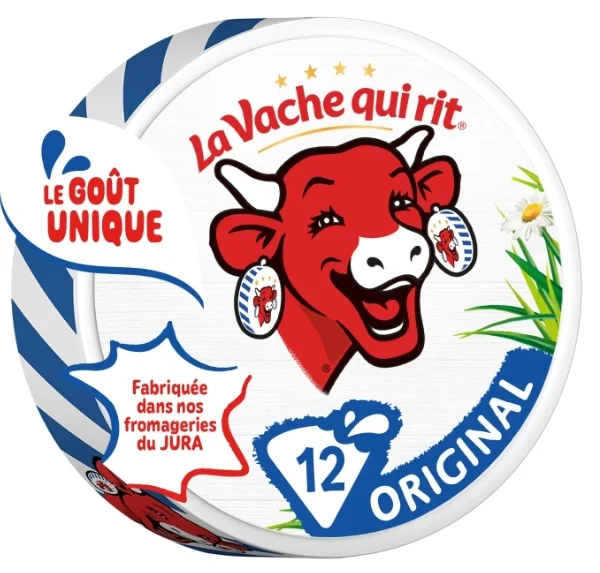
Spread both halves of the bagel generously with plain cream cheese. This is a solid base to add the toppings. I’m not a fan of cream cheese at all, and I don’t consider it to be real cheese. But in this combination, it works nicely. Cream cheese comes in different shades of quality. The original Philadelphia cream cheese is a good and reliable choice. Stick to the plain version and avoid flavored versions. Another excellent brand is the French Kiri cream cheese, which you may find in better supermarkets. I like it even more than the Philadelphia.
Fun Fact: Kiri is the phonetic shortcut from the original French brand name which was "La vache qui rit", meaning the laughing cow.
Fun Fact: Kiri is the phonetic shortcut from the original French brand name, "La vache qui rit", meaning the laughing cow.
Onion
Onions and salmon go very well together. They add a certain bite to the composition. The sharpness of the onion is tamed by the fat content of the salmon and cream cheese. However, the wrong choice of onion can ruin your experience. Since you are using a raw onion slice, your best choice is between white and red onions. They are milder than yellow onions. Because of their visual appeal, I prefer red onions.
Add onion according to your taste. Depending on the level of sharpness you may use just a few onion rings instead of a whole slice.
Tomato
A slice of tomato adds juiciness and a slightly tart note, creating a pleasant balance between the fatty salmon and cream cheese. The best choice is the steak tomato. It is solid and meaty and does not produce too much juice which could create a soggy mess of your sandwich. I prefer it on top of the onion slice because it is softer and won't be crushed by the harder onion,
Capers
Capers are the flower buds of the caper bush (Capparis spinosa), and are grown around the Mediterranean Sea. Main producers are Spain, Italy, Greece, and Morocco.
You find capers as a typical ingredient in many Mediterranean dishes such as pizza, spaghetti Puttanesca, and many seafood dishes. They are also a perfect accompaniment to smoked salmon and tomatoes.
They are sold in little glass jars, usually in brine or vinegar. Both versions are good to go with your creation, just be sure to drain them before use. They are a neat garnish and complement the other ingredients with another level of complexity in taste.
When you shop for capers, look out for the word "non pareil". This label means that they are less than 7mm in diameter. But keep looking for even smaller ones, they have a more delicate texture and a more intense flavor.
What is the Best Layering Order?
One thing is sure: the cream cheese goes first, and the salmon goes on top. Between those two it all depends on your preference and practical considerations. In terms of taste, it does not really matter.
I like to put the onion first on the cream cheese and then the tomato. That way, the softer tomato wouldn’t be crushed. Then comes the salmon on top.
But where to put the capers? The ideal position would be on top of the salmon. That works fine when putting the other half of the bagel on top. That way, the capers will not roll all over your breakfast table. If you prefer your Nova Scotia lox bagel as an open sandwich, plant the capers between the tomato and the salmon to keep them in place. Tastewise, this is better than fixing the capers in the cream cheese.