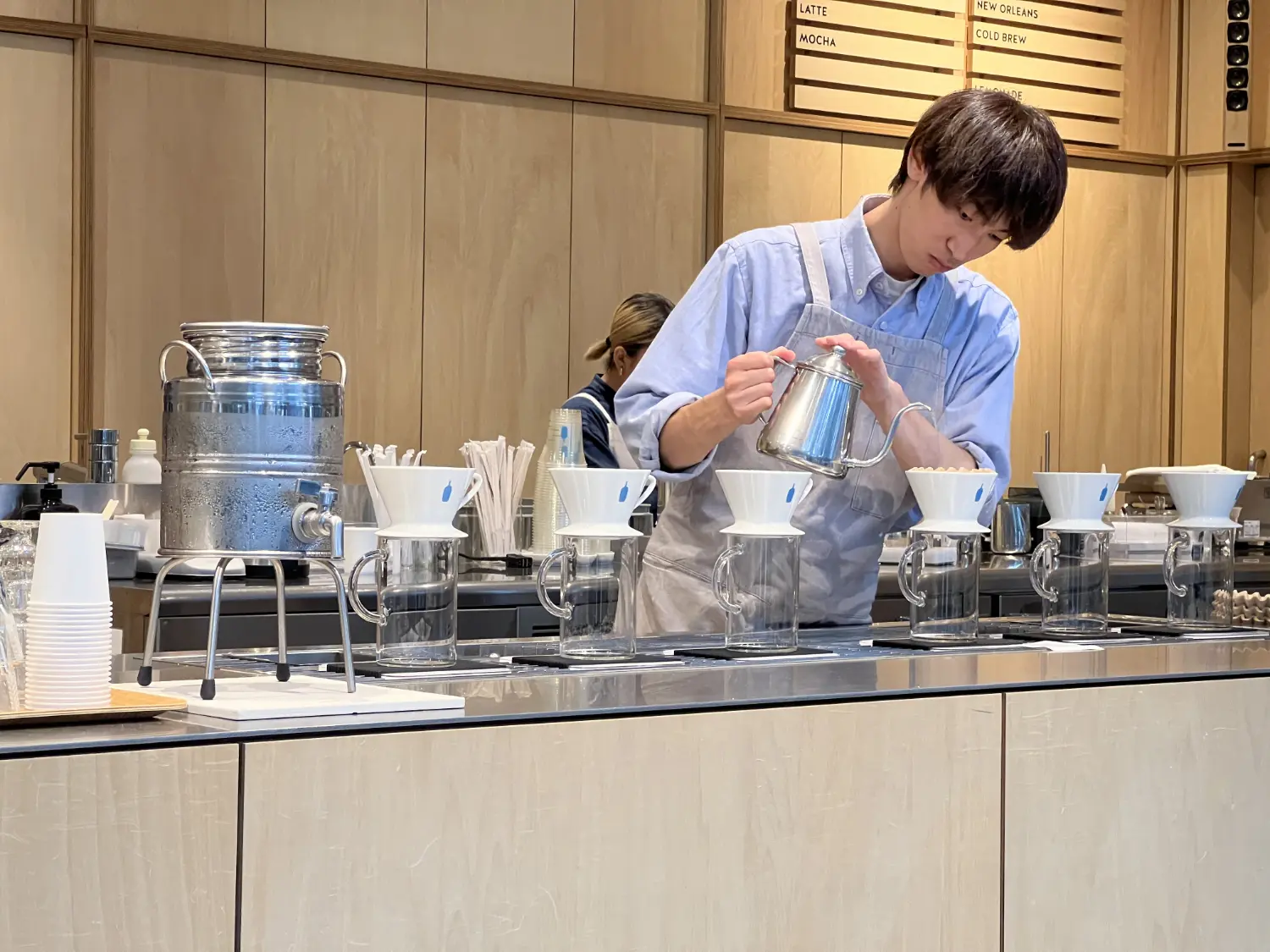
Walk into any metropolitan café worth its artisanal salt, and you'll notice the typical signs of "third wave" coffee culture right away: minimalist interior design, a finely calibrated pour-over station, and the conspicuous absence of flavored syrups. When I walked into a Blue Bottle coffee shop, I immediately understood the idea.
But even a messy and disorganized place can be a true third wave cafe. You know it once the barista is discussing terroir with a prospective customer, with the reverence usually reserved for wine. But beyond the aesthetic of craft and the vocabulary of connoisseurship, a question remains: is third wave coffee actually better, or is it simply better at sharing its story?
The answer, like any good espresso, is complex and layered.
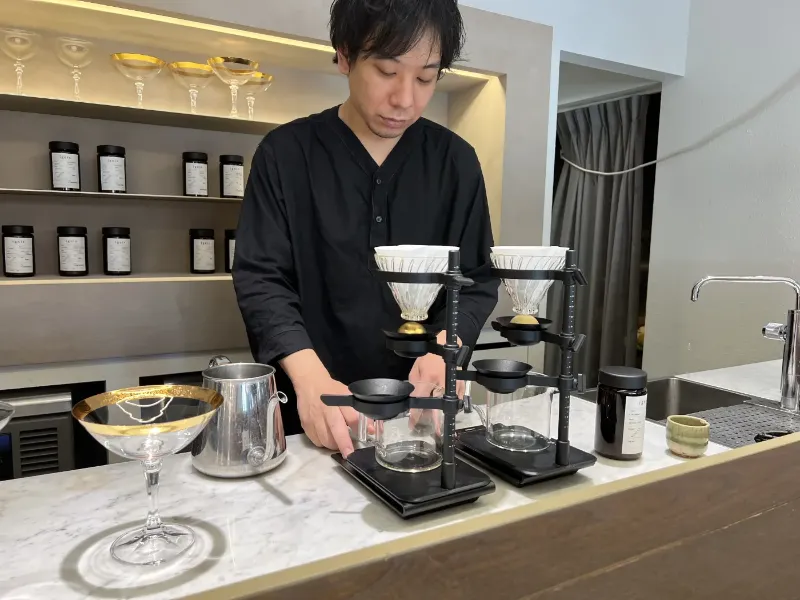
Both meet the criteria of a Third Wave Coffee shop

The Third Wave Narrative
First, let's establish what we're talking about. The "wave" metaphor is attributed to coffee entrepreneur Trish Rothgeb, who identified three historical phases in American coffee consumption in a 2003 article.
The first wave introduced coffee into every American home as a commodity product—think Maxwell House and Folgers, coffee as fuel rather than pleasure. Percolator brew and instant coffee belong to this wave.
The second wave, led by Starbucks and its imitators, introduced Americans to espresso drinks and overly sweet coffee concoctions that are more like desserts. With comfortable, upscale interiors, the cafés became a place between home and work, ideal for relaxing and having a good time with friends.
The third wave emerged in the early 2000s. Coffee became recognized as an artisanal product. The quality of the coffee beans substantially improved, and consequently, flavored syrups became unnecessary. Emphasis shifted to lighter roasts that preserve origin characteristics, accurate brewing methods, and sourcing disclosure. Aficionados of coffee adopted the way oenophiles speak of wine—with attention to region, altitude, post-harvest processing, and the subtle flavor notes of single origin coffees. To belong to the in-crowd, you have to be able to distinguish between an Ethiopian Yirgacheffe and a Brazilian Yellow Bourbon.
Is the Coffee Actually Better?
An honest assessment requires nuance. In many cases, yes, third wave coffee is objectively superior in culinary terms. The beans are of a higher grade, more careful roasting and brewing—these aren't just theater. A well-executed pour-over using freshly roasted, properly stored beans from a quality producer will reveal flavor complexity that simply doesn't exist in commodity coffee or over-roasted beans. The fruit notes, the acidity, the clarity—these are real sensory sensations, not marketing fabrications.
But there's a ceiling to this improvement, and we may have hit it. The difference between lousy coffee and good coffee is enormous. The difference between good coffee and great coffee is noticeable. The difference between great coffee and transcendent coffee? That's where things get philosophical, and where the law of diminishing returns kicks in hard. When you're paying $10 for a single cup, and the barista is timing extraction to the second, are you getting three times the culinary satisfaction of a $3 cup? Only you can answer that.
The American Exceptionalism Problem
This is where the geographical critique is especially telling. The third wave narrative makes sense primarily in the American context because American coffee culture was, for most of the 20th century, genuinely terrible. Europe and Japan, on the other hand, have a much longer and more educated relationship with coffee.
Italy, France, and Austria had centuries-old café cultures with established quality standards. An Italian pulling espresso shots in Naples in 1960 didn't need the third wave to tell them about proper extraction or bean quality—they already knew. The techniques and care that American third wave advocates "discovered" in the 2000s were simply how coffee had been made in many European contexts all along. The Italian bar, the Viennese coffeehouse, the French café—these were already treating coffee as something worth doing properly.
Japan presents an even more interesting counterpoint. Japanese kissaten (coffee shops) have obsessed over brewing technique, bean quality, and the ritualistic preparation of coffee since the mid-20th century. The careful attention to detail, the focus on single-origin beans, the reverence for the brewing process—all third wave calling cards in America—were standard practice in Japanese coffee culture decades earlier. Japan didn't need a "wave" because it never had a valley.
Marketing Versus Meaning
So is third wave coffee just marketing? Not entirely, but marketing clearly is responsible for its success. The movement has been brilliant at storytelling, at making consumers feel sophisticated and ethically aligned with their choices. The emphasis on direct trade and farmer relationships appeals to progressive values. The vocabulary of tasting notes and processing methods gives customers cultural capital—it's a form of accessible connoisseurship that makes you feel educated and discerning.
But here's the inconvenient truth: much of the sensory impression is constructed through context and expectation. Studies in wine appreciation have repeatedly shown that people's perception of quality is heavily influenced by price, packaging, and presentation. Coffee isn't immune to these psychological effects. When you're told you're drinking a $50/pound Ethiopian Yirgacheffe with notes of "blueberry and jasmine," processed by a specific cooperative whose farmers you could theoretically visit, you're primed to taste those things—and to value the experience more highly.
This doesn't mean the quality differences are imaginary, but it does mean that the gap between the coffee itself and the experience of the coffee is filled in with narrative, aesthetics, and ideology. You're not simply buying better coffee; you're buying membership in a particular cultural identity.
The Verdict
Third wave coffee is both genuinely better and a marketing phenomenon—these aren't mutually exclusive. It has elevated coffee quality in the American context, where standards were abysmally low. It has created fairer supply chains in some cases, though the "direct trade" claims deserve scrutiny. It has introduced genuine skill and meticulousness, where previously there was simply convenience and commodity.
But it has also created a somewhat precious, gatekeeping culture that can prioritize process over pleasure and signaling over satisfaction. When the ritual becomes more important than the result, when you need a degree in tropical agronomy to feel confident ordering coffee, something has gone awry.
Perhaps the most honest assessment is this: third wave coffee has made it easier to get genuinely good coffee in American cities, which is unambiguously positive. But it has also sometimes mistaken complexity for quality, and education for enjoyment. The best cup of coffee isn't necessarily the one with the most elaborate background story or the most exact brewing parameters—it's the one you most enjoy drinking.
And sometimes, just sometimes, that might be a simple espresso at a Roman bar that's been making them the same way for fifty years, with no ceremony and no story beyond "this is how it's done." No waves required.