The first time I experienced flavored coffee was in Honolulu. This was before Starbucks used flavored syrups in their latte concoctions. A really strong cloud of hazelnut aroma wafted from a coffee stand in the Ala Moana mall and caught my attention. Growing up in Europe, hazelnuts have always been my favorite nuts, so I could not resist trying it and got a paper cup of the first hazelnut coffee of my life.
It was a major disappointment. The coffee flavor was obliterated, and the chemical hazelnut flavor bonded with my taste buds for hours.
Coffee purists often wrinkle their noses at the mention of flavored brews, and I became one of them. Behind those enticing aromas and taste profiles lies a troubling truth: the flavored coffee industry is built on masking inferior products with synthetic chemicals, compromising one of nature’s most complex and beautiful beverages.
The Evolution of Flavored Coffee
Coffee contains hundreds of aromatic compounds that create its distinctive taste. The practice of adding flavors to coffee isn’t new - people have been adding spices and sweeteners to their brews for centuries. Adding cream and sugar was supposed to break the bitterness, particularly of low-grade or over-roasted coffee. In some cultures, cinnamon or cardamom was added. However, the modern flavored coffee industry adds a new dimension by enlisting chemistry.
How It Gets Its Flavor - And Loses Its Soul
Most commercial flavored coffees rely on synthetic flavor oils that coat the beans after roasting. The beans are sprayed with these oils while still warm from roasting to ensure the flavor compounds are absorbed. The base coffees chosen for flavoring are invariably lower-grade beans with less distinctive natural profiles - because why waste a single-origin coffee on a product designed to taste like chemicals?
The flavoring process typically adds 2-3% of the bean’s weight in oils. This completely dominates and destroys the natural flavor profile. These synthetic oils penetrate the porous structure of roasted beans, essentially embalming them in artificial compounds that bear no relationship to real coffee or real hazelnuts, vanilla, or whatever flavor they’re pretending to be.
The Hidden Ingredients: A Chemical Cocktail
What exactly goes into those flavoring agents? While “natural” and “artificial” flavors appear on labels, these terms are deliberately misleading. The flavor industry operates with significant proprietary protections, ensuring consumers remain in the dark about exactly what chemicals they’re consuming with their morning cup.
Many flavoring agents contain:
Propylene glycol - a carrier for the flavor compounds, also found in antifreeze. Yes, the same chemical family that keeps your car running in winter is coating your coffee beans.
Synthetic aromatic chemicals - laboratory-created compounds designed to mimic natural flavors but lacking the complexity and nuance of the real thing
Emulsifiers and stabilizers - to ensure even distribution and shelf stability of these foreign substances
Sugar derivatives - to enhance sweetness perception and mask the chemical aftertaste
The FDA may consider these ingredients “safe,” but safety isn’t the same as desirable. These chemicals represent a fundamental corruption of what coffee should be - a pure, natural product that speaks of its origin and terroir, not a laboratory experiment.
Quality Concerns: The Industry’s Dirty Secret
Here’s what the flavored coffee industry doesn’t want you to know: flavored coffee is a dumping ground for defective, stale, and inferior beans. When a coffee lacks distinctive natural flavors or contains defects that would make it unsellable as regular coffee, adding strong artificial flavors is a convenient way to hide these shortcomings from coffee drinkers.
Companies charge premium prices for flavored coffee made with beans that would otherwise be rejected or sold for pennies on the dollar. You’re essentially paying for the privilege of drinking substandard coffee masked by cheap chemicals.
Another problem with flavored beans is that they contaminate everything they come into contact with. Coffee grinders and brewing equipment become tainted with chemical oils that can take weeks to fully dissipate. Coffee shops that sell flavored coffees must maintain separate equipment because these synthetic oils are insidious and nearly impossible to remove once they’ve infiltrated your equipment.
In a coffee shop serving flavored coffee, the cloud of artificial flavor pollutes the air and overwhelms the delicate aroma of properly roasted, unflavored beans. Not a place for a serious coffee lover.
There Is No Debate About Taste
Coffee connoisseurs prefer unflavored coffee - they recognize that flavoring is an assault on everything that makes good coffee so desirable. It’s like adding oak chips to wine to pretend it's aged for years in oak barrels. A real wine enthusiast would not tolerate this either. The comparison may sound hyperbolic, but it’s to the point.
Since the emergence of the third-wave coffee movement, appreciation for specialty coffee has grown for terroir, varietal differences, and processing methods that create inherent natural flavor notes such as berry, chocolate, citrus, and floral tones. A naturally processed Ethiopian Yirgacheffe can taste like blueberries and wine. A well-roasted Colombian can exhibit caramel and nuttiness. A Kenyan can burst with blackcurrant and citrus. These flavors are real, complex, and the result of everything from the coffee plant’s genetics to the altitude where it grew to how the beans were processed and roasted.
Artificial hazelnut flavoring, by contrast, tastes like hazelnut in the same way that grape soda tastes like grapes - which is to say, it doesn’t. It tastes like a chemical approximation created by food scientists, optimized for consistency and cost, not for truth or beauty.
Some argue that flavored coffee makes the beverage more accessible to people who find traditional coffee too bitter or intense. But this argument is fundamentally flawed. If someone doesn’t like coffee, the solution is not to destroy it with chemicals until it no longer tastes like coffee - the solution is to either drink something else or learn to appreciate properly prepared coffee.
Take the time to develop your palate. Coffee rewards attention and education, just as wine, cheese, or chocolate does. It may seem bitter at first, but it will reveal itself as complex, layered, and endlessly fascinating once you learn what you’re tasting.
Health Considerations
Flavored coffees are generally recognized as safe for consumption, but “safe” is a remarkably low bar. The flavoring oils add calories that aren’t always accounted for on nutrition labels. More significantly, many people report digestive discomfort, headaches, or allergic reactions to synthetic flavoring compounds. Especially, propylene glycol seems to pose a certain risk. The research in this area remains limited, and we don’t know anything about the long-term effects of daily consumption of these synthetic compounds.
Coffee Deserves Better
Flavored coffee represents everything that’s wrong with industrial food production. The reliance on synthetic compounds, inferior beans, and opaque labeling practices reveals a fundamental disrespect for both the product and the consumer.
My hazelnut coffee experience in Honolulu taught me an important lesson: that chemical cloud was a warning, not an invitation. The artificial taste, lingering for hours, was my palate telling me something had gone terribly wrong.
Quality coffee is one of the world’s most complex and beautiful beverages. It connects us to specific places, to the farmers who grew it, to centuries of tradition and craft. It deserves to be treated with reverence, not doused in propylene glycol and synthetic “natural flavoring.”
The rise of specialty coffee in recent years has shown that consumers can appreciate complexity and authenticity. We’ve moved beyond instant coffee and grocery-store pre-ground coffee; we now understand that quality matters. Flavored coffee is a step backward, a capitulation to the lowest common denominator.
If you currently drink flavored coffee, I urge you to reconsider. Try a high-quality single-origin coffee from a reputable roaster. Take the time to taste it properly. You might discover that real coffee - unmasked, unadorned, honest - offers flavors more nuanced and satisfying than any chemical approximation could provide.
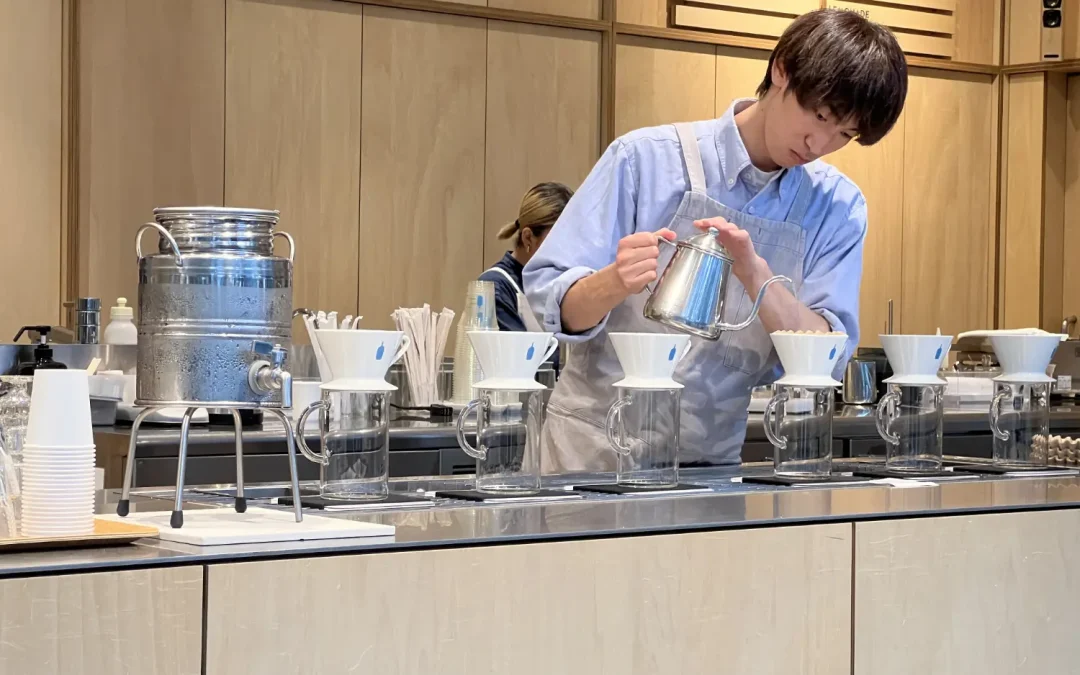
Walk into any metropolitan café worth its artisanal salt, and you'll notice the typical signs of "third wave" coffee culture right away: minimalist interior design, a finely calibrated pour-over station, and the conspicuous absence of flavored syrups. When I walked into a Blue Bottle coffee shop, I immediately understood the idea.
But even a messy and disorganized place can be a true third wave cafe. You know it once the barista is discussing terroir with a prospective customer, with the reverence usually reserved for wine. But beyond the aesthetic of craft and the vocabulary of connoisseurship, a question remains: is third wave coffee actually better, or is it simply better at sharing its story?
The answer, like any good espresso, is complex and layered.
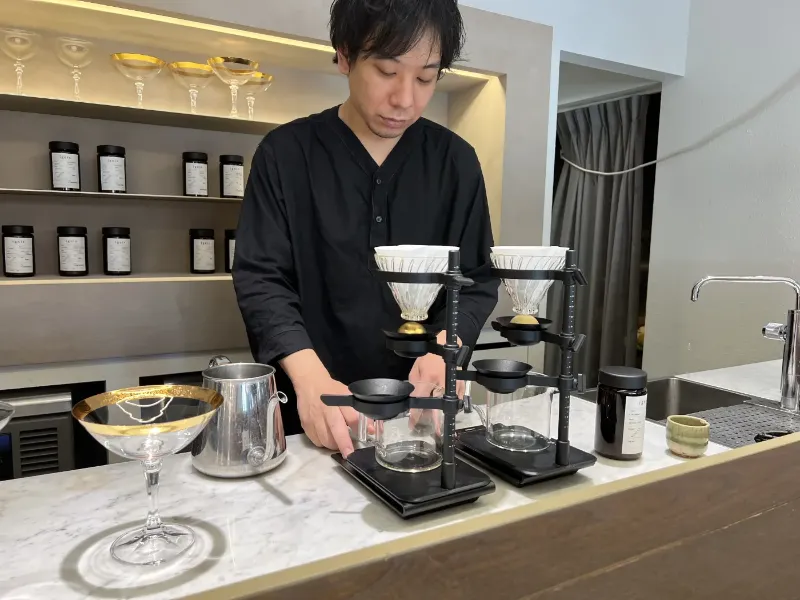
Both meet the criteria of a Third Wave Coffee shop
The Third Wave Narrative
First, let's establish what we're talking about. The "wave" metaphor is attributed to coffee entrepreneur Trish Rothgeb, who identified three historical phases in American coffee consumption in a 2003 article.
The first wave introduced coffee into every American home as a commodity product—think Maxwell House and Folgers, coffee as fuel rather than pleasure. Percolator brew and instant coffee belong to this wave.
The second wave, led by Starbucks and its imitators, introduced Americans to espresso drinks and overly sweet coffee concoctions that are more like desserts. With comfortable, upscale interiors, the cafés became a place between home and work, ideal for relaxing and having a good time with friends.
The third wave emerged in the early 2000s. Coffee became recognized as an artisanal product. The quality of the coffee beans substantially improved, and consequently, flavored syrups became unnecessary. Emphasis shifted to lighter roasts that preserve origin characteristics, accurate brewing methods, and sourcing disclosure. Aficionados of coffee adopted the way oenophiles speak of wine—with attention to region, altitude, post-harvest processing, and the subtle flavor notes of single origin coffees. To belong to the in-crowd, you have to be able to distinguish between an Ethiopian Yirgacheffe and a Brazilian Yellow Bourbon.
Is the Coffee Actually Better?
An honest assessment requires nuance. In many cases, yes, third wave coffee is objectively superior in culinary terms. The beans are of a higher grade, more careful roasting and brewing—these aren't just theater. A well-executed pour-over using freshly roasted, properly stored beans from a quality producer will reveal flavor complexity that simply doesn't exist in commodity coffee or over-roasted beans. The fruit notes, the acidity, the clarity—these are real sensory sensations, not marketing fabrications.
But there's a ceiling to this improvement, and we may have hit it. The difference between lousy coffee and good coffee is enormous. The difference between good coffee and great coffee is noticeable. The difference between great coffee and transcendent coffee? That's where things get philosophical, and where the law of diminishing returns kicks in hard. When you're paying $10 for a single cup, and the barista is timing extraction to the second, are you getting three times the culinary satisfaction of a $3 cup? Only you can answer that.
The American Exceptionalism Problem
This is where the geographical critique is especially telling. The third wave narrative makes sense primarily in the American context because American coffee culture was, for most of the 20th century, genuinely terrible. Europe and Japan, on the other hand, have a much longer and more educated relationship with coffee.
Italy, France, and Austria had centuries-old café cultures with established quality standards. An Italian pulling espresso shots in Naples in 1960 didn't need the third wave to tell them about proper extraction or bean quality—they already knew. The techniques and care that American third wave advocates "discovered" in the 2000s were simply how coffee had been made in many European contexts all along. The Italian bar, the Viennese coffeehouse, the French café—these were already treating coffee as something worth doing properly.
Japan presents an even more interesting counterpoint. Japanese kissaten (coffee shops) have obsessed over brewing technique, bean quality, and the ritualistic preparation of coffee since the mid-20th century. The careful attention to detail, the focus on single-origin beans, the reverence for the brewing process—all third wave calling cards in America—were standard practice in Japanese coffee culture decades earlier. Japan didn't need a "wave" because it never had a valley.
Marketing Versus Meaning
So is third wave coffee just marketing? Not entirely, but marketing clearly is responsible for its success. The movement has been brilliant at storytelling, at making consumers feel sophisticated and ethically aligned with their choices. The emphasis on direct trade and farmer relationships appeals to progressive values. The vocabulary of tasting notes and processing methods gives customers cultural capital—it's a form of accessible connoisseurship that makes you feel educated and discerning.
But here's the inconvenient truth: much of the sensory impression is constructed through context and expectation. Studies in wine appreciation have repeatedly shown that people's perception of quality is heavily influenced by price, packaging, and presentation. Coffee isn't immune to these psychological effects. When you're told you're drinking a $50/pound Ethiopian Yirgacheffe with notes of "blueberry and jasmine," processed by a specific cooperative whose farmers you could theoretically visit, you're primed to taste those things—and to value the experience more highly.
This doesn't mean the quality differences are imaginary, but it does mean that the gap between the coffee itself and the experience of the coffee is filled in with narrative, aesthetics, and ideology. You're not simply buying better coffee; you're buying membership in a particular cultural identity.
The Verdict
Third wave coffee is both genuinely better and a marketing phenomenon—these aren't mutually exclusive. It has elevated coffee quality in the American context, where standards were abysmally low. It has created fairer supply chains in some cases, though the "direct trade" claims deserve scrutiny. It has introduced genuine skill and meticulousness, where previously there was simply convenience and commodity.
But it has also created a somewhat precious, gatekeeping culture that can prioritize process over pleasure and signaling over satisfaction. When the ritual becomes more important than the result, when you need a degree in tropical agronomy to feel confident ordering coffee, something has gone awry.
Perhaps the most honest assessment is this: third wave coffee has made it easier to get genuinely good coffee in American cities, which is unambiguously positive. But it has also sometimes mistaken complexity for quality, and education for enjoyment. The best cup of coffee isn't necessarily the one with the most elaborate background story or the most exact brewing parameters—it's the one you most enjoy drinking.
And sometimes, just sometimes, that might be a simple espresso at a Roman bar that's been making them the same way for fifty years, with no ceremony and no story beyond "this is how it's done." No waves required.
I have to admit that I have been a coffee lover since childhood. My favorite drink helps me to get ready for a challenging day, and I never get tired of its incredible range of taste sensations. So, wherever I travel, I venture out into the local coffee scene. Needless to say, that I am only going for real coffee, not the over-roasted kind, made drinkable with sugary syrups, other artificial flavors, or trendy milk substitutes. If you want that, you should go to some well known chains.
One of my favorite places for top-quality coffee is in the Ginza area of Tokyo. This area is packed with shops of all the major international fashion brands, historical specialty shops, and fine-dining restaurants. Shopping in Tokyo's Ginza district can be a lot of fun, but it could also empty your wallet real fast.
Taking a break and having a coffee in a Ginza Cafe can be disappointing. Even a cup of standard-quality coffee can be quite expensive. Fortunately, I found a charming café right in the dead center of Ginza with great coffee preparations that will not strain your budget too much.
Tricolore Cafe in Tokyo's Ginza
Ambiance and Atmosphere
When you enter the café through the revolving door, you may have the impression that you have left modern-day Japan for a European location back in time.
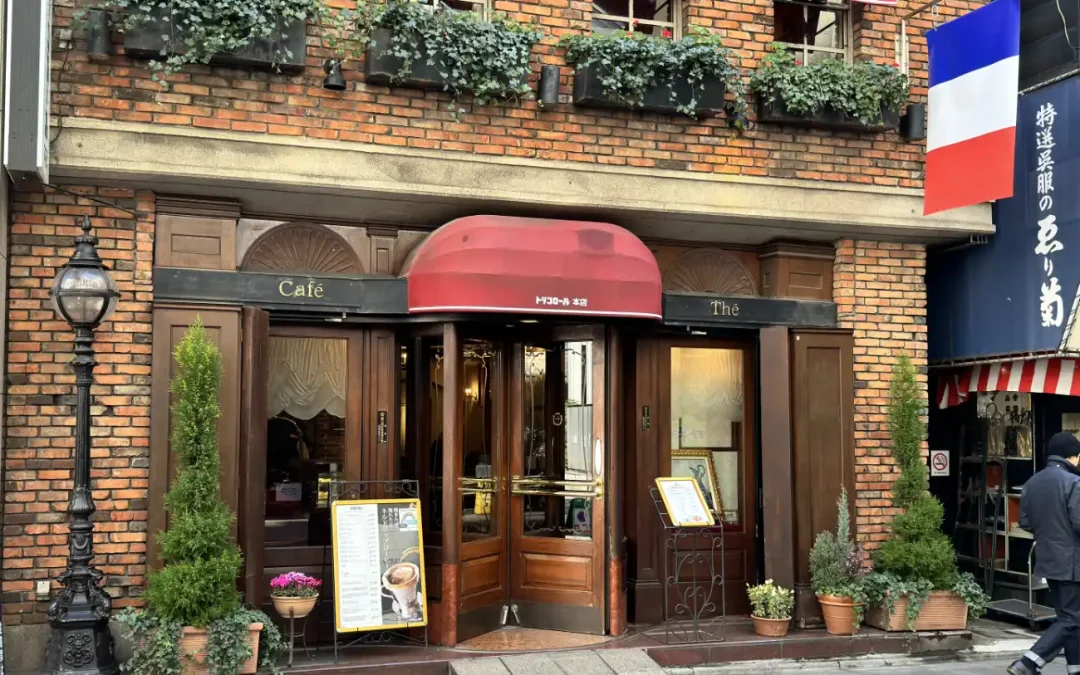
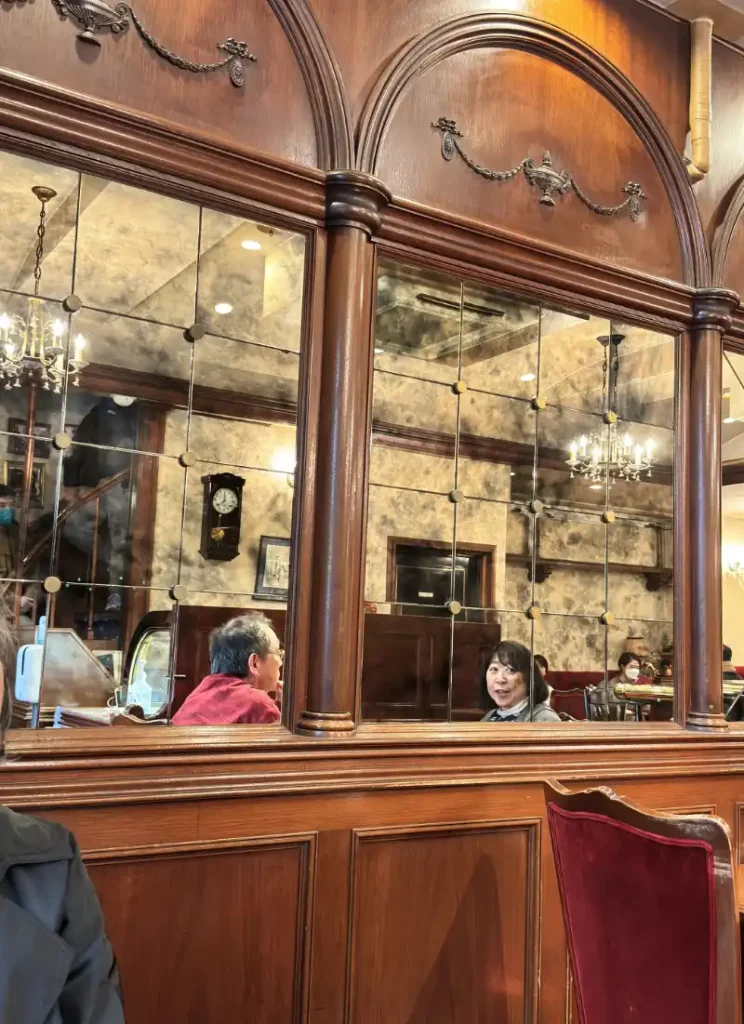
Since its opening in 1936, Tricolore Cafe in Ginza has maintained a nostalgic yet elegant atmosphere with a European feel.
The cafe's retro style is underlined by brick walls and slightly faded wall mirrors—the antique-looking furniture adds to the impression of old Europe. The nostalgic atmosphere reminded me of an upscale Austrian cafe in Vienna, but I could also recognize style elements from France. The eclectic mix of classic vibes is a bit confusing but charming. It produces a tranquil atmosphere that will help you recover from the stress of your shopping spree.
Interior Views of Tricolore Café
Photos by Author
Coffee Choices
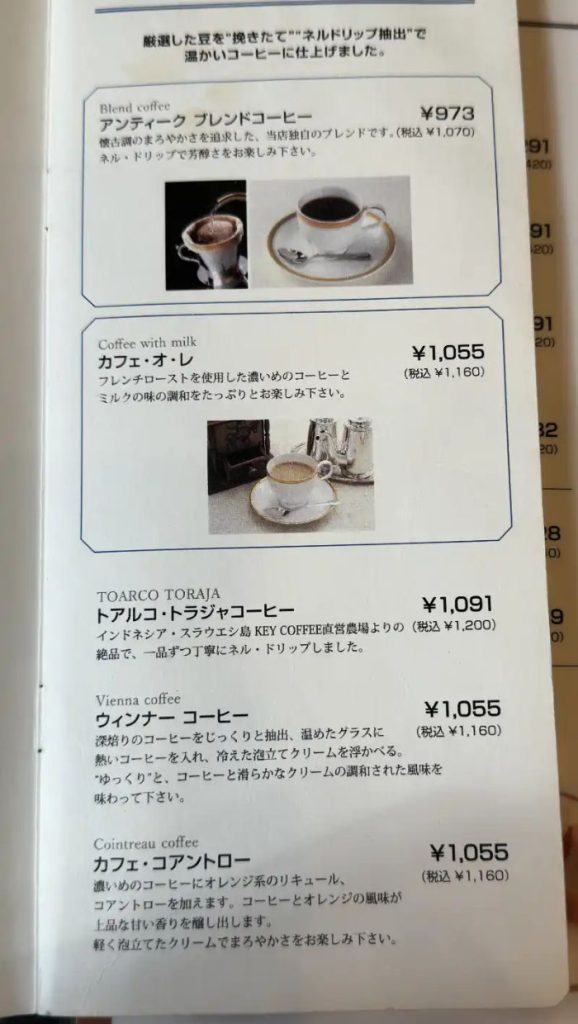
The only obvious hint of Austrian coffee is the menu item Vienna Coffee, but a careful look at the menu reveals at least another Austrian inspired one. Here are the coffee preparations of Tricolore Ginza:
Antique Blend
Tricolore Cafe's signature coffee is the Antique Blend, a rich coffee made from coffee beans sourced from Central and South America. Every cup is hand-brewed as a pour-over using a cotton flannel filter. This method is also used at the Ueshima Coffee shops, where they call it Nel drip. The result is a cup of smooth and deep flavor without any hint of paper flavor. I prefer the Nel drip over a paper filter, as I find the paper flavor extremely distracting. it reminded me of the brewing method I experienced in Costa Rica.
Café au Lait
The other main choice is a French Roast coffee served with milk. The waiter will pour the milk at your table, so you have full control over the right balance. It's the Tricolore version of a latte.
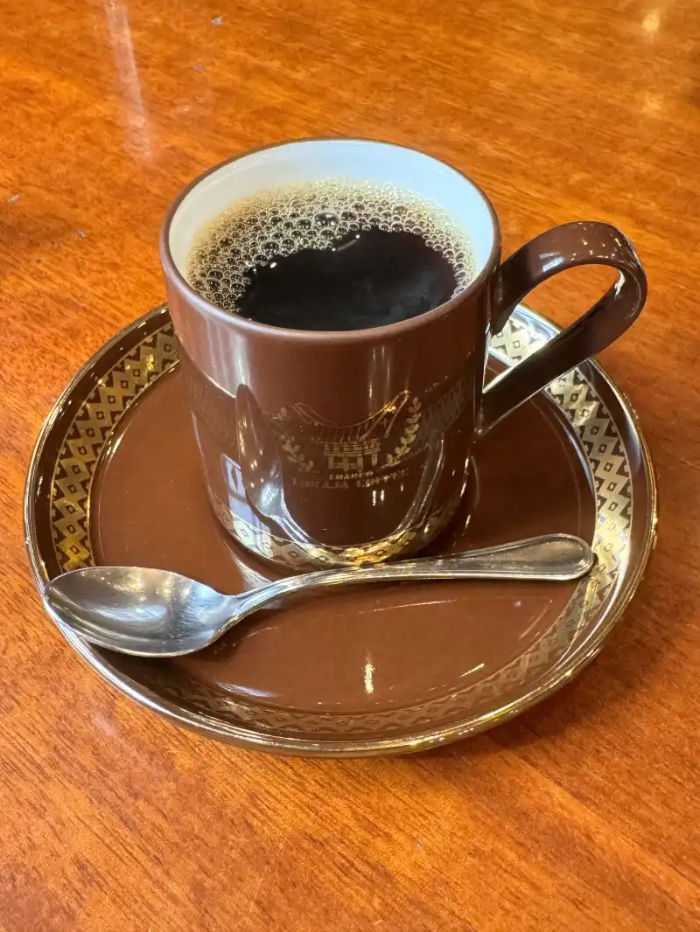
Toarco Toraja, a single-origin coffee
Further down the menu, I found Toarco Toraja coffee and decided to go for it because I like Indonesian coffee. Also, I always go for a single-origin coffee when I see one. It turned out to be the right decision.
Toarco Toraja is a rare coffee from the Indonesian island of Sulawesi. Its history goes back to the 1700s when Indonesia was a Dutch colony. Unfortunately, the plantations were neglected for decades until after WWII, when Key Coffee, a major Japanese coffee company, revitalized the old plantations in the highlands. The Japanese company developed the region's infrastructure to facilitate the production of this high-end coffee. They also helped farmers and cooperatives improve their farming and post-harvest methods.
This single-origin coffee is known for its clean, well-balanced, and slightly fruity flavor profile. The meticulous preparation at Tricolore Cafe, again using the Nel drip method, ensures that every cup brings out the distinctive characteristics of the Toarco Toraja bean. I have had the same coffee at other cafes, but they didn't do justice to these outstanding beans.
Toarco Toraja Coffee
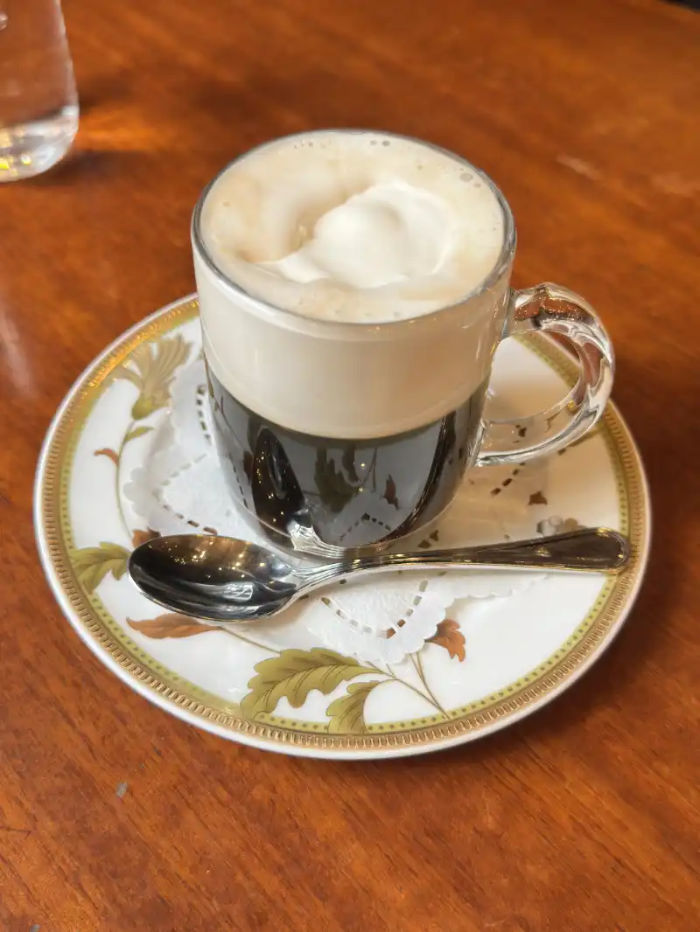
Vienna Coffee
My wife went for the Vienna Coffee. You may know that Austria has a long list of coffee specialties, but there is no Vienna Coffee among them. Outside of Austria, the term is generally used for coffee with whipped cream or what they call whipped cream. Instead of real whipped cream, very often you will be treated to something from a spray can. It may look a bit like whipped cream, but it's made from vegetable oils, has a greasy mouthfeel and is sweetened, Usually, you are in for a big disappointment, but not in Tricolore Café.
What you get here as "Vienna Coffee" would be called "Einspänner" in Austria. A strong coffee with a generous dollop of real whipped cream on top, not the disgusting spray can version. The whipped cream in this café is outstanding and reminded me of my childhood experience in Germany. Taste the whipped cream first before gently stirring. On the bottom of the glass is some coarse sugar, which will slowly dissolve and round the taste of this heavenly drink. It is not overly sweet, but if you prefer it without sugar, mention it when ordering.
Vienna Coffee aka Einspänner
Cointreau Coffee
This drink is also a classic Austrian coffee drink known in Austria as "Maria Theresia Kaffee", a favorite of the late Austrian Empress. It looks like the Einspänner above but is fortified with a shot of the French orange liqueur Cointreau. I first had this amazing drink in Business Class at Austrian Airlines and fell in love with it.
The Coffee Menu
Coffee Menu
Food choices
Beyond coffee, Tricolore Ginza offers a selection of mouth-watering cakes proudly displayed in a case near the entrance, where you can't overlook them. The chocolate cakes grabbed my attention in particular.
We just had lunch somewhere else, so we skipped those cakes for today, but friends told me that the cheesecake is creamy and just right in sweetness, while the apple pie is a perfect combination of flaky crust and tender fruit. It must be particularly good in autumn when the marvelous Japanese apples hit the market.
Other patrons had sandwiches and a crispy salad for lunch, which looked like an attractive option. For dessert, you could order one of the great cake selections to complete the perfect lunch in style.
Like many cafés in Japan, they have a Morning Menu, often called morning service. It includes a cup of Antique Blend, buttered toast, and salad.
Since the café closes at 7:00 pm, it is not a dinner destination.
My Verdict: Must-go
Whether a cup of coffee or a coffee preparation qualifies as a gourmet item depends on the quality of ingredients and the skill and method of preparation. The Tricolore Cafe excels on all levels.
That's why it became my instant favorite. It is also more than just a coffee shop; here, it's a place to take a break from the bustling Ginza area and relax for a while in a nostalgic atmosphere. Treat yourself to a cup of exceptional coffee and a delicious cake. Whether you're drawn by the charm of their Austrian style coffee preparations, the exotic flavor of Toarco Toraja coffee, or the distinctive taste of their Antique Blend, you will have one of the best coffee experiences in the center of Tokyo.
Practical Information for Visiting Tricolore Cafe Ginza
Location and Contact
It is very close to the main intersection of the Ginza district, which has the Mitsukoshi Department Store on one corner and the Wako jewelry store on another corner. In a quieter street parallel to the main drag of Ginza, you will find TricoloreCafé. You can't overlook the French flag in front of the building. From the outside, it may look like a fancy French restaurant, but when you step in, you will see it is a charming café on two floors.
The address is 5-9-17 Ginza, Chuo-ku, Tokyo. For reservations, you can call them at their telephone number, 03-3571-1811.
It's just a minute's walk from Ginza Station, which you can reach via the Ginza Line, Hibiya Line, or Marunouchi Line. If you're coming from Higashi-Ginza Station (Hibiya Line, Toei Asakusa Line), it's only a two-minute walk.
Opening Times
Their opening hours are:
Monday: 8:00 AM - 7:00 PM
Tuesday: Closed
Wednesday to Sunday: 8:00 AM - 7:00 PM
Reservation and Seating
There are 49 seats on two floors. Although not mandatory, making a reservation might be wise to avoid waiting, especially during peak hours. I've found that an early visit or a late afternoon stop is usually less crowded. On weekends, there will usually be a lot of visitors lining up.
Smoking
Since April 2020, the rules regarding smoking have changed in Tokyo. Smoking is generally not permitted indoors, with a few exceptions, to provide a comfortable environment for all guests and protect the staff.
Payment Options
All major credit cards in addition to cash and other payment systems like PayPay are accepted.