When I first came to Japan many years ago, sushi and ramen were at the top of my to-eat list—and they still are. Luckily, a good friend took me to a Yakitori bar, and I was immediately sold on yet another part of Japanese cuisine. Yakitori is an important part of Japanese cuisine and a culinary experience that is not to be missed. I recommend you give it a try, too.
Yakitori are Japanese grilled chicken skewers. They are often grilled on charcoal and seasoned with salt or tare, a delicate, slightly sweet sauce. Many different parts of the chicken are used, some of which you may not even have heard of. It has nothing to do with fried or grilled chicken we know in the West.
Read on for a comprehensive guide.
From Street Food to Culinary Art
The history of yakitori dates back to the Meiji period (1868-1912), a time marked by significant cultural and social transformations in Japan. During this era, eating meat became more widely accepted, paving the way for dishes like yakitori to become popular with ordinary citizens. Street vendors began grilling skewered chicken pieces over charcoal-fired pits and selling them to hungry passersby. These portable snacks were popular among laborers and travelers for their convenience and delicious flavor.
Yakitori's evolution continued and gained traction, especially after World War II. The post-war period saw an increased demand for affordable and accessible food. Over time, yakitori evolved from a humble street food into a refined culinary art form.
Yakitori started as a beloved street food, but in modern times, it has evolved into a gourmet delight in upscale restaurants. This development was supported by the greater availability of prime-quality domestically produced chicken.
You can still find it as street food and enjoy the street food ambiance of bygone days at local temple and shrine festivals. But if you want a truly gourmet experience, you should try a decent yakitori restaurant. Currently, six Yakitori restaurantsin Japan have earned a Michelin star. If budget is a concern, seven are listed in the Bib Gourmand category that will not break the bank and will not disappoint you.
Exploring Different Types of Yakitori Skewers
The variety of yakitori is amazing. If you are only familiar with the chicken parts you get at KFC, you are in for a surprise. There are at least two dozen different cuts of chicken, including organs. Many of them you will never have heard of. Dining at a Yakitori joint is like a master class in chicken anatomy.
Some of the more exotic ones may be available only in upscale restaurants. In addition to chicken skewers, you may encounter skewers with veggies, different kinds of mushrooms, ginkgo nuts, quail eggs, and more.
The most common Chicken Cuts:
The following are standard items found at most yakitori places. The selection at food stalls of local festivals may be a bit more limited, though.
Mune (Breast): Lean and delicate, typically served with a light seasoning of salt or tare sauce
Momo (Thigh): known for its juicy and flavorful texture
Sasami (Chicken tenderloin): a lean and tender cut from the inner breast with a dollop of wasabi
Kawa (Skin): Crispy, rich, and incredibly flavorful when grilled to golden perfection
Negima: Alternating pieces of chicken and green onions, creating a harmonious blend of textures
Tebasaki (Chicken Wings): Crispy exterior with succulent meat, a favorite among yakitori enthusiasts
Sunagimo (Gizzard): appreciated for its crunchy, firm texture
Reba (Liver): Creamy and rich, often seasoned with tare sauce for depth of flavor
Tsukune (Minced chicken meatballs): sometimes containing crunchy bits of cartilage
Hatsu(Heart): prized for its unique springy texture
Shiro reba (Fatty Liver): the chicken equivalent of Foie Gras
Nankotsu(Cartilage): usually from the knee or breastbone, noted for its crunchy texture
Chicken wings yakitori styleYakitori negima, chicken meat alternating with leeks
Specialty Cuts
A few of the following cuts are very difficult to find and may be available only at high-end places.
Tamahimo (Undeveloped chicken eggs): not found everywhere
Chōchin or Lantern (ovary with undeveloped chicken eggs): heavenly when the yolk breaks in your mouth
Seseri (Neck): chewy mouthfeel and rich flavor
Bonjiri (Tail): high-fat content and unique flavor
Kanmuri or Tosaka (Chicken comb}: a very rare delicacy rich in collagen
Chicken ovaries with undeveloped eggs
Vegetables and Other Ingredients in Yakitori
Yakitori isn't just about chicken; vegetable skewers in yakitori are equally delightful and provide a refreshing balance to the rich meat flavors. They increase the variety of textures and tastes to complement the savory chicken skewers and give your taste buds a little break during a meal.
Here are some popular options you can include in your yakitori:
Shishito Peppers: Mildly spicy peppers that are perfect when charred over the grill
Mushrooms: Varieties like shiitake and enoki mushrooms bring an earthy depth to your yakitori experience
Bell Peppers: Colorful bell peppers add sweetness and a slight crunch
Asparagus: Grilled asparagus spears offer a tender yet crisp bite
Cherry Tomatoes: Juicy and slightly acidic, cherry tomatoes burst with flavor when grilled
Ginnan (Gingko nuts): Creamy texture with a well-balanced bitterness
These skewers are often seasoned with the same shio (salt) or tare (sauce) as the chicken skewers, ensuring they harmonize well on your plate. They enhance the meal aesthetically and provide a more rounded and healthy dining experience.
The Keys to Delicious Yakitori
The most important factors for delicious yakitori are the quality of ingredients, namely chicken, and the grilling technique.
The quality of chicken in Japan is generally very high, even in the lower-price segment dominated by imports. About 40% of chicken meat is imported to Japan, mainly from Brazil, Thailand, and China, with the US share of only about 1%.
Domestically bred, non-branded chicken is in the medium price range and can be easily found in any local supermarket. I admit to going to KFC occasionally, where I have seen them proudly displaying that they use chicken from the Iwate Prefecture, which is well known for its quality products.
Top quality chicken
Jidori (local chickens with a brand status) top the chicken hierarchy in price and quality and must meet strictly controlled standards.
At least 50% bloodline from 38 native chicken breeds established in the Meiji era
Chickens must be raised for at least 75 days
Free-range conditions with less than 10 chickens per square meter after 28 days
Specific breeding and care protocols with priority on chicken health.
Careful Raising Techniques and Feeding
Japanese chicken farmers focus intensely on creating low-stress environments for chickens. A typical example is the KumanoJidori chicken, which is raised in quiet mountain settings with carefully selected and antibiotic-free feed, including local ingredients like regional rice and fruit peels. This approach minimizes stress and enhances meat quality.
The result is chicken meat that is notably different from standard commercial chickens - with characteristics like chewiness, rich flavor, minimal odor, and superior nutritional content. Top Japanese and international chefs praise these chickens for their exceptional quality.
Grilling Technique and the Right Charcoal
Grilling the delicate chicken pieces requires the utmost concentration. The sewers have to be constantly turned over at the right distance from the glowing charcoal. Chicken liver requires a different heat level than other pieces, like chicken wings or cartilage. Too much heat will dry out the pieces and ruin the experience. On the other hand, you don't want to have undercooked chicken, either.
Watching a skilled Yakitori chef will make you realize that it is an art form.
The choice of charcoal is another cornerstone of yakitori’s unique flavor profile. Grilling over quality charcoal beats grilling over gas any time.
The ultimate choice of charcoal is binchotan. This type of charcoal is made from Japanese oak and is known for producing exceptionally high and steady heat. Yakitori chefs can precisely control the temperature and grill the meat evenly. Binchotan also burns cleaner and adds a subtle smokiness to the food without overpowering the natural flavor of the chicken parts.
The high heat from the charcoal sears the meat quickly, sealing in juices and creating a delightful contrast between crispy skin and tender interior.
How to Eat Yakitori
Relax. Eating Yakitori does not require any superior skills. Even in an upscale Yakitori restaurant, you can pick up the skewers by hand. The first two or three pieces on a skewer of Negima or Tsukune are easy to take off with your teeth. The last pieces higher up on the skewer, you can push them down with your chopsticks for easy reach.
If you want, you can also remove all the pieces by pushing them with your chopsticks onto your plate. You then discard the empty sticks in the provided cup.
The chef already seasoned the yakitori skewers with sea salt or tare. Tare is a slightly sweet and savory sauce made from soy sauce, mirin, and possibly some secret ingredient, depending on the chef. You can add some red-colored Shijimi (a hot Japanese spice mix) or green-colored Sansho (a Japanese pepper, similar to Szechuan pepper, but milder).
What to drink with Yakitori
Whatever you like works fine. You can choose between beer, sake, shochu, and even wine in most places.
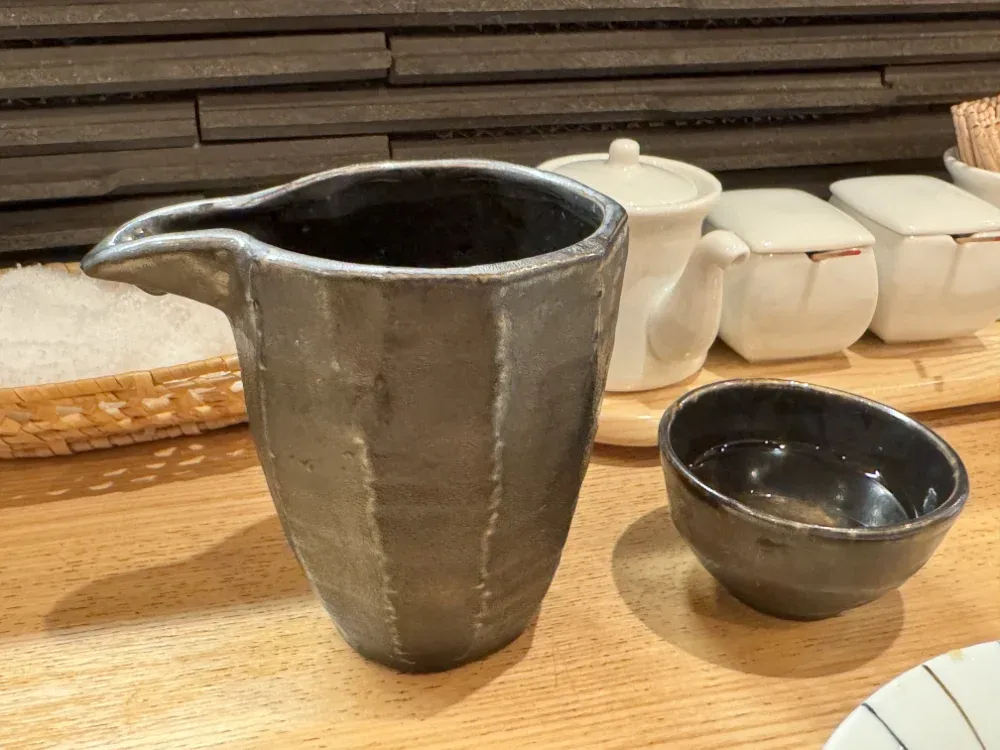
I usually start with a small draft beer and then switch to cold sake, preferably a dry one. If you are unsure which one to select, you can always ask the staff for a recommendation. I love the combination of grilled skewers and sake, which creates a harmonious balance of flavors. Sake also helps to cleanse the palate between each flavorful bite of yakitori, allowing you to fully savor every skewer.
Sake pitcher and cup
Where to Enjoy This Culinary Delight in Japan?
Street food
Yakitori is an inexpensive and popular snack at local street festivals, shrines, or temples. These events are held throughout the country, especially in the summertime.
These festivals are a lot of fun but don't expect the yakitori to be on a true gourmet level.
Izakayas
Another fun place to have a casual dining experience is an Izakaya. Izakayas are informal pubs that serve alcoholic drinks and various popular tapas-style snacks. They are lively spots to unwind and socialize with friends and coworkers after a long day at the office.
Yakitori is a standard item on the menu but can vary widely in quality. In many of these places, the focus is more on drinking than on a culinary experience.
Yakitori-ya for a Gourmet Experience
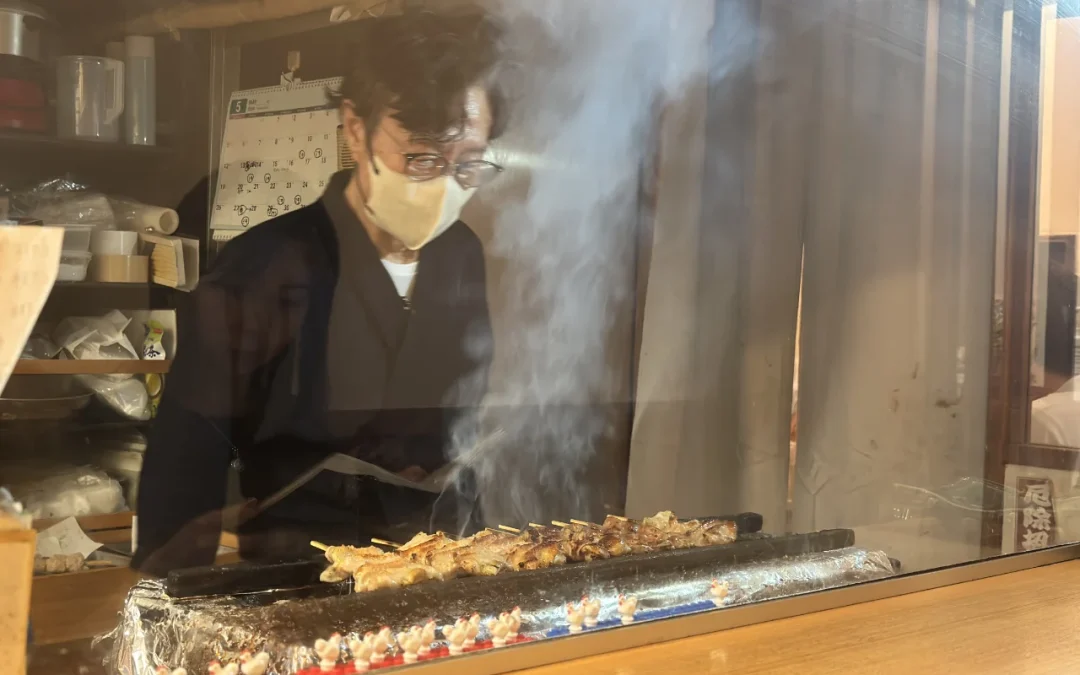
Yakitori-ya are specialized restaurants dedicated to serving the best Yakitori. These establishments often have an open kitchen where you can sit at the counter and watch the skilled chefs grill the skewers over hot charcoal. A seat at the counter is my favorite spot as it allows me to observe the grilling process up close and connect with the chef.
The menu usually features a variety of chicken parts, along with some vegetable options.
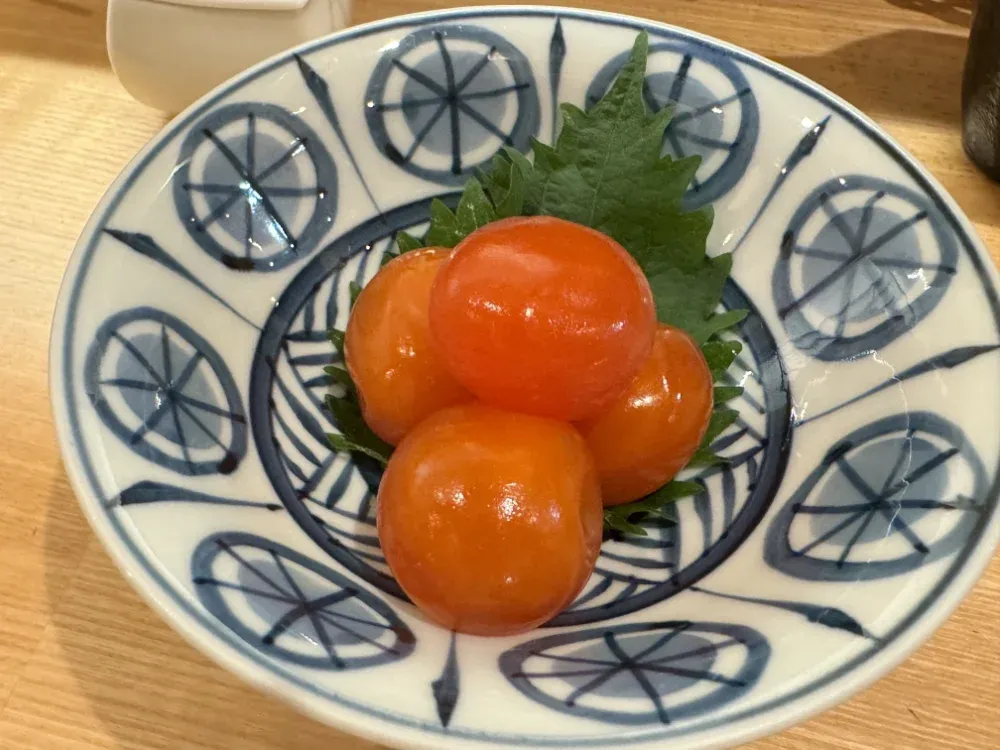
Most restaurants offer various traditional or experimental side dishes besides chicken skewers, which are worth exploring. For me, this is reminiscent of the tapas culture, which I enjoyed in Spain.
Miso marinated undeveloped eggs
My favorite Yakitori Restaurant
Having been in Tokyo for quite some time now, I have had the chance to sample yakitori in various places and all price categories.
It seems to be a given that when you spend a lot of money, you will have a guaranteed gourmet experience. But let me tell you that with less than 50 bucks per person, including drinks, you can have a very satisfying experience.
One of these places is Momofuku, located in a dark corner of the popular downtown area of Ningyocho. They are open only four days a week on a reservation-only basis. You have to plan ahead as you might get a reservation only in a week or two, especially when you want one of the seven seats at the counter. By the way, I took all the photos in this post there.
The closest subway stations are Ningyocho (Hibiya and Toei Asakusa Lines), Hamacho (Toei Shinjuku Line), and Suitengumae (Hanzomon Line).
Popular Yakitori Locations in Japan You Shouldn't Miss
There is no shortage of great Yakitori places in Tokyo, Osaka, and many other places around Japan. Here is just a tiny selection of notable places where you can enjoy it in the context of Japanese popular culture.
But if you want to upgrade your culinary experience, you should also go to a more upscale yakitori restaurant. There are currently six Yakitori restaurants in Japan with a Michelin star. If you are budget-minded, you are also not out of luck. Seven are listed in the Bib Gourmand category. They will not break the bank and will not disappoint you.
Omoide Yokocho in Shinjuku
One of the best places for yakitori is undoubtedly Omoide Yokocho in Shinjuku. Known as "Memory Lane," this quaint alleyway is packed with tiny eateries offering delicious and affordable yakitori. As you walk through, you'll be enveloped by the enticing aroma of grilling meat. Each small establishment has its unique take on this beloved dish, making it a paradise for food enthusiasts.
Gādo-shita in Yurakucho
Another iconic spot is Gādo-shita, located under the elevated train tracks between the Yurakucho and Shinbashi stations. This area is close to the Marunouchi business district and is famous for bustling yakitori-ya, which offer an easy-going and nostalgic atmosphere. It's a popular hangout for local office workers and offers an authentic feeling of Tokyo's after-hours culture.
Other Notable Locations Across Japan
Pontocho Alley in Kyoto: Known for its traditional teahouses and restaurants, Pontocho offers excellent yakitori options in a historic setting.
Dotonbori in Osaka: Famous for its vibrant street food scene, Dotonbori features numerous stalls and izakayas serving mouthwatering yakitori.
Hakata in Fukuoka: Renowned for its rich culinary culture, Hakata provides some of the best chicken skewers with unique regional flavors.
These locations are not just about food; they offer an immersive experience of Japanese culture and social dining and drinking practices. Whether you're exploring the nooks and crannies of Shinjuku or enjoying the lively atmosphere under Yurakucho's train tracks, these spots are essential stops on your yakitori adventure.
Can I make Yakitori at Home?
Well, you can certainly cut up a chicken, spear the pieces on a skewer, and throw them on a barbecue. There are many recipes online for making "Yakitori" at home.
But I have to disappoint you; this will be rather a kebab and not an authentic Yakitori. There is a lot more to it. Gathering quality ingredients and mastering the proper grilling techniques is not for amateurs.
Spare yourself and your guests the disappointment. Hop on a plane to Japan and indulge in the real thing.
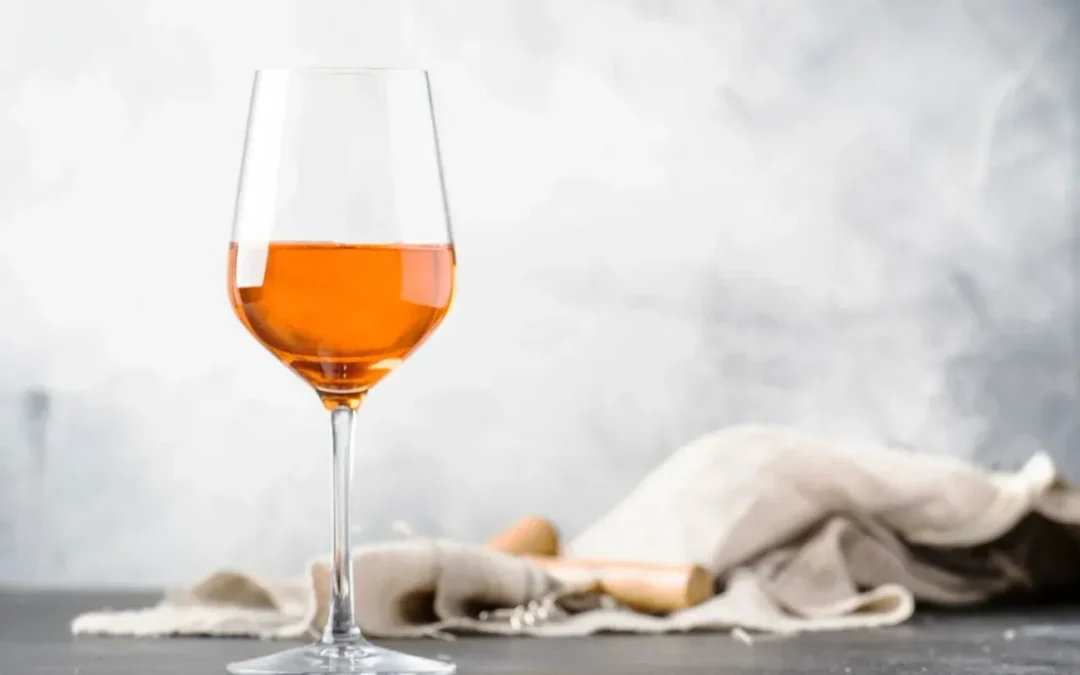
Only recently, I found this enigmatic version of white wine while having dinner with my wife at our favorite wine bar in Ningyocho, a lively downtown area in Tokyo. We wanted to start the evening with a glass of sparkling wine, and the owner served one with an orange color. The taste and mouthfeel were like we never had before.
This first encounter with orange wine sparked my curiosity.
A casual Orange Wine-tasting among Friends
I must admit that I completely missed the comeback of Orange Wine, which has been going on for about 30 years and seems to be accelerating. My lame excuse is that I have never noticed the presence of this variety in the wine shops I go to. The red wine section is the largest one, followed by a slightly smaller white wine section. There is a place for rosé wine somewhere in the corner, and I had never noticed the fourth color, orange.
I decided to explore more and share this experience with some wine-loving friends. So, I arranged a small private orange wine-tasting event at my favorite wine bar. Two Japanese friends, one French, one Scot, and one German, wine lovers, all well-traveled and seasoned with red wine, attended. The owner had prepared six different orange wines from Italy, France, Spain, and New Zealand, accompanied by some delicious tidbits from Italian and French cuisine with Japanese ingredients,
This tasting session left all of us a bit confused. We understood that we would need a lot more experience with this variety of wine. The taste and flavor were new to us and didn't quite fit the categories we were used to. Yes, it's a white wine, but with a more complex flavor profile and a different mouthfeel. We found orange is a separate but respectable category besides red, white, and rosé.
Orange wine is becoming a worldwide item
After doing a little internet research, I found that in other parts of the world, the appreciation of this kind of wine is much more advanced. Georgia, in particular, is very active in promoting orange wine and is organizing events in many countries.
China, a newcomer in the international wine scene, presented an orange wine from Ningxia, China, at an event in Hong Kong, which was recognized as the Best Wine from China.
I have found many more links to similar events on an international or local level. Many of these links are to local newspapers or radio stations, and the articles are often hidden behind a paywall. Wherever you are, check your local press.
A Wine with a Fascinating History
Orange wine, also known as amber wine or skin-contact wine, has a rich history going back an estimated 6,000 years. Some experts claim even 8,000 years. Originating in Georgia, a small country in the Caucasus bordering the Black Sea, this ancient winemaking method involves fermenting white grapes together with their skins, resulting in a unique orange hue. This method was also adopted in Slovenia and Northern Italy, where it became popular among winemakers.
However, consumer preference shifted in the 1900s to lighter and brighter white wines.
In the late 1900s, a new trend toward artisanal or natural wines emerged, gaining traction in the last two decades, with more winemakers experimenting with alternative wine-making techniques.
In 2004, David A. Harvey, a legendary wine merchant from London, UK, coined the term "Orange Wine". This classification of wine according to its color is logical and convincing and has caught on worldwide since.
How Orange Wine is Made
Here’s a breakdown of the winemaking process and the essential steps in creating this fascinating beverage:
Harvesting: The journey begins with selecting ripe white grapes.
Maceration: Different from traditional white winemaking, where the grape skins and seeds are immediately removed, they remain in contact with the juice for days or even months. Macerating the grapes for such a long time extracts the skin's tannins, phenolic compounds, and vibrant color.
Fermentation: Yeasts—often indigenous—initiate fermentation naturally. Minimal intervention during this stage allows the character of the terroir to shine through.
Aging: Post-fermentation, the wine is typically aged in vessels such as stainless steel tanks or oak barrels. In Georgia, a clay amphora called qvevri is still used, like in the old days, and it is often buried in the ground. This stage allows flavors to develop further.
Bottling: Finally, after careful filtration (or none at all for some artisans), orange wine is bottled and left to rest before making its grand entrance into your glass.
The result is a captivating drink that often presents a cloudy appearance due to its unfiltered nature—a hallmark of natural wines that adds a sense of intrigue.
This winemaking technique has also been used in Italy's Friuli Venezia Giulia or Slovenia's Goriška Brda. Notably, Georgian qvevri wines showcase ancient practices that bring forth rare grape varieties and oxidative styles that are increasingly appreciated by modern palates seeking alternative winemaking techniques.
Qvevri are used to make orange wine in Georgia
Taste Profile and Tasting Notes
The taste profile of orange wine is a delightful exploration of flavors that can surprise even the most seasoned aficionados. Depending on the grape variety and the winemaking techniques employed, each bottle presents a unique journey, rich in character and complexity. Here’s what you can expect when indulging in this vibrant beverage:
Color: First, you'll notice its striking amber hue, which results from extended skin contact during fermentation.
Aroma: Expect enticing aromas ranging from apricot and citrus zest to earthy notes like dried herbs and tea leaves. The olfactory experience sets the stage for what’s to come.
Flavor Profile: On the palate, orange wines can evoke a symphony of tastes:
Citrus Fruits: Bright flavors such as orange peel and lemon are common.
Tropical Notes: Some may present hints of mango or guava, adding an exotic touch.
Floral Undertones: Fragrant notes reminiscent of chamomile or jasmine can emerge beautifully.
Earthy Complexity: Expect savory elements like nuttiness or a subtle herbal edge that creates balance.
Tannins: One notable difference between orange wine and traditional white wines is the tannin structure. Due to the skin contact during fermentation, tannins in orange wine create depth and an intriguing mouthfeel—something you would rather expect in medium- to full bodied reds.
Food Pairing with Orange Wine
The multifaceted flavor profile makes orange wine an ideal companion for a wide range of food. Enjoy it with dishes such as grilled octopus, roasted vegetables drizzled with olive oil, or rich cheeses that complement its complex notes.
The solid structure and rich palate of orange wines allow them to complement a range of culinary delights. Consider some of these suggestions:
Grilled Meats: The tannic quality of orange wine goes well with the charred flavors of grilled chicken, lamb, or even beef.
Savory Dishes: Autumn-inspired dishes featuring squash or mushrooms harmonize well with the wine's earthy tones.
Spicy Foods: The wine's refreshing acidity can offset the heat of spicy dishes, such as Thai, Korean or Indian cuisine.
Seafood: Grilled octopus, squid, or shrimp are complemented with orange wine’s acidity, which cuts through the richness and enhances flavors.
Serve the wine slightly chilled: This will enhance aroma and texture.
Ultimately, the key to successful pairings lies in balancing the layers of flavor, allowing the orange wine to shine alongside your chosen dish.
Production Areas and Grape Varietals
Where is orange wine made? The short answer to that question is:
Almost in every wine-producing area.
The classic areas are, of course:
Georgia: This Caucasian country is the birthplace of orange wine. Still used today, the ancient fermentation practice of burying clay vessels (qvevri) underground results in a unique terroir expression. The Rkatsiteli and Mtsvane grape varieties shine in these deep, amber wines.
Slovenia: The Goriška Brda region is renowned for its skin-contact wines made from indigenous grape varieties like Ribolla Gialla. Here, the winemaking philosophy emphasizes minimal intervention and organic practices, allowing nature to dictate flavor profiles.
Italy: Particularly in Friuli Venezia Giulia, winemakers produce stunning orange wines that reflect their commitment to artisanal techniques. Varieties such as Pinot Grigio and Verdicchio find an expressive voice here through extended skin contact, creating a delightful intersection of tradition and innovation.
And then, there is the rest of the world. There is probably not a single wine-producing country without artisanal winemakers experimenting with skin-fermented techniques on local varietals. In California and Oregon, it may be Chardonnay and Sauvignon Blanc; in France, Germany, and Austria, it may be Riesling and even Gewürztraminer.
The Rise in Popularity of Orange Wine
The recent popularity of orange wine can be attributed to an increasing consumer interest in natural and organic wines. Younger generations play an essential role, as they appreciate sustainably produced wine, artisanal methods, and rich history. The organic and minimal-intervention approach has drawn in a dedicated following of wine enthusiasts, leading to a rising number of producers popping up across various regions.
Wine bars and restaurants, especially those focused on natural offerings, have started including an array of orange wines to cater to this demand. This visibility contributes significantly to the beverage's ascendance in contemporary wine culture.
As influencers and sommelier experts frequently share their experiences, this has helped to create a sense of community and spark curiosity around orange wine, making it a regular topic of conversation among wine lovers. Retailers offering niche selections of orange wine online further contribute to its visibility and enable consumers to explore different styles and producers.
However, enjoying orange wine isn't without its challenges. Traditionalists often express hesitance due to its distinctive taste profile—often described as funky or robust compared to typical white wines. While some might view this as an obstacle, others see it as an invitation to redefine what 'good' wine can be.
Choosing the Right Orange Wine for You
If you're intrigued by orange wine and want to make an informed decision when purchasing, keep these essential tips in mind:
Producer Reputation: Research reputable wineries known for their orange wine production.
Grape Variety: Consider the specific grape variety and the flavors you enjoy most. Familiarity with certain varieties can guide your choices.
Region: Explore various regions producing orange wine. It's a lot of fun to explore the unique characteristics based on different climates and terroirs.
It doesn't make sense to give specific recommendations because you will most likely not be able to find them in your local wine shop. The reason is that many talented winemakers are still in the stage of experimenting and perfecting their products and have limited quantities for sale.
I find a different selection on offer whenever I visit my favorite wine shop.
I have to admit that I have been a coffee lover since childhood. My favorite drink helps me to get ready for a challenging day, and I never get tired of its incredible range of taste sensations. So, wherever I travel, I venture out into the local coffee scene. Needless to say, that I am only going for real coffee, not the over-roasted kind, made drinkable with sugary syrups, other artificial flavors, or trendy milk substitutes. If you want that, you should go to some well known chains.
One of my favorite places for top-quality coffee is in the Ginza area of Tokyo. This area is packed with shops of all the major international fashion brands, historical specialty shops, and fine-dining restaurants. Shopping in Tokyo's Ginza district can be a lot of fun, but it could also empty your wallet real fast.
Taking a break and having a coffee in a Ginza Cafe can be disappointing. Even a cup of standard-quality coffee can be quite expensive. Fortunately, I found a charming café right in the dead center of Ginza with great coffee preparations that will not strain your budget too much.
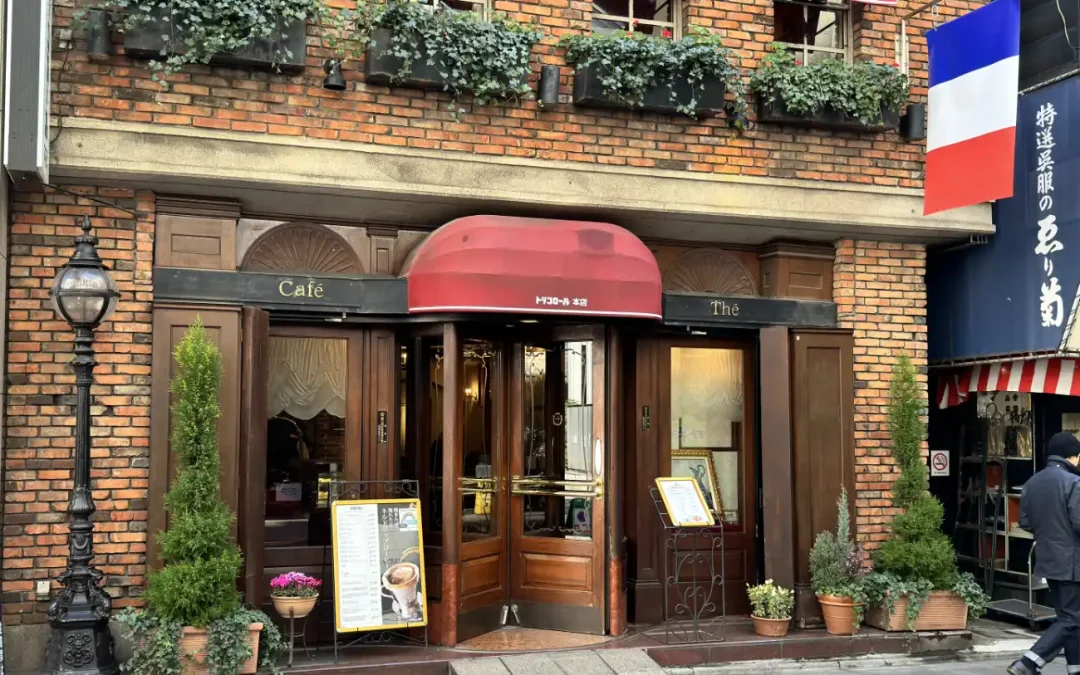
Tricolore Cafe in Tokyo's Ginza
Ambiance and Atmosphere
When you enter the café through the revolving door, you may have the impression that you have left modern-day Japan for a European location back in time.
Since its opening in 1936, Tricolore Cafe in Ginza has maintained a nostalgic yet elegant atmosphere with a European feel.
The cafe's retro style is underlined by brick walls and slightly faded wall mirrors—the antique-looking furniture adds to the impression of old Europe. The nostalgic atmosphere reminded me of an upscale Austrian cafe in Vienna, but I could also recognize style elements from France. The eclectic mix of classic vibes is a bit confusing but charming. It produces a tranquil atmosphere that will help you recover from the stress of your shopping spree.
Interior Views of Tricolore Café
Photos by Author
Coffee Choices
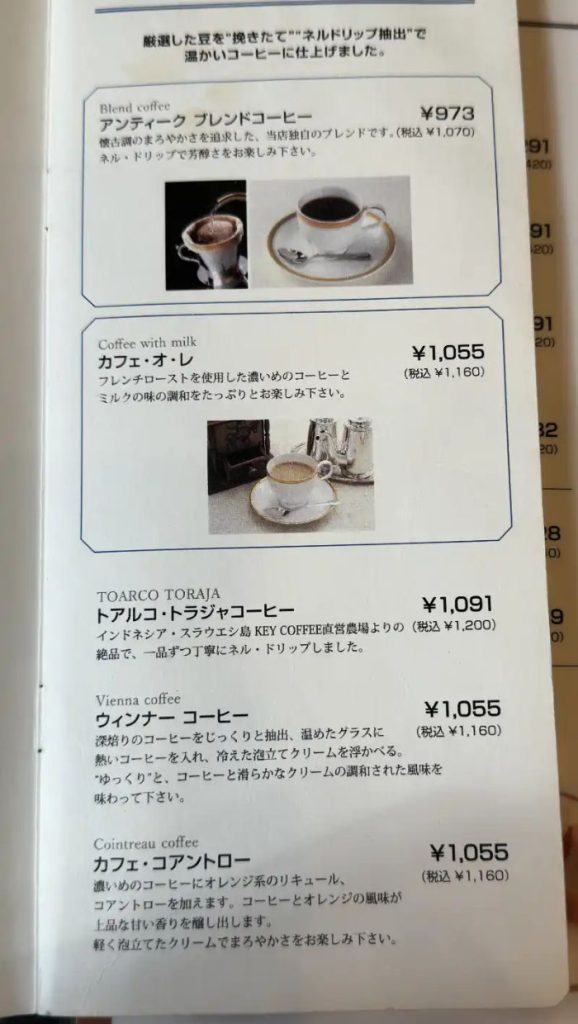
The only obvious hint of Austrian coffee is the menu item Vienna Coffee, but a careful look at the menu reveals at least another Austrian inspired one. Here are the coffee preparations of Tricolore Ginza:
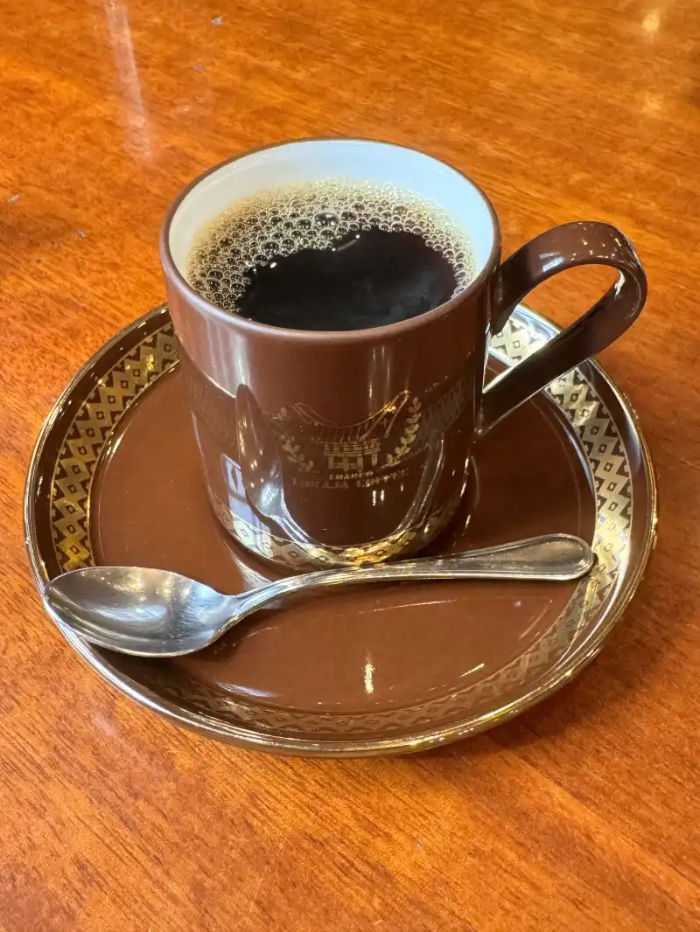
Antique Blend
Tricolore Cafe's signature coffee is the Antique Blend, a rich coffee made from coffee beans sourced from Central and South America. Every cup is hand-brewed as a pour-over using a cotton flannel filter. This method is also used at the Ueshima Coffee shops, where they call it Nel drip. The result is a cup of smooth and deep flavor without any hint of paper flavor. I prefer the Nel drip over a paper filter, as I find the paper flavor extremely distracting. it reminded me of the brewing method I experienced in Costa Rica.
Café au Lait
The other main choice is a French Roast coffee served with milk. The waiter will pour the milk at your table, so you have full control over the right balance. It's the Tricolore version of a latte.
Toarco Toraja, a single-origin coffee
Further down the menu, I found Toarco Toraja coffee and decided to go for it because I like Indonesian coffee. Also, I always go for a single-origin coffee when I see one. It turned out to be the right decision.
Toarco Toraja is a rare coffee from the Indonesian island of Sulawesi. Its history goes back to the 1700s when Indonesia was a Dutch colony. Unfortunately, the plantations were neglected for decades until after WWII, when Key Coffee, a major Japanese coffee company, revitalized the old plantations in the highlands. The Japanese company developed the region's infrastructure to facilitate the production of this high-end coffee. They also helped farmers and cooperatives improve their farming and post-harvest methods.
This single-origin coffee is known for its clean, well-balanced, and slightly fruity flavor profile. The meticulous preparation at Tricolore Cafe, again using the Nel drip method, ensures that every cup brings out the distinctive characteristics of the Toarco Toraja bean. I have had the same coffee at other cafes, but they didn't do justice to these outstanding beans.
Toarco Toraja Coffee
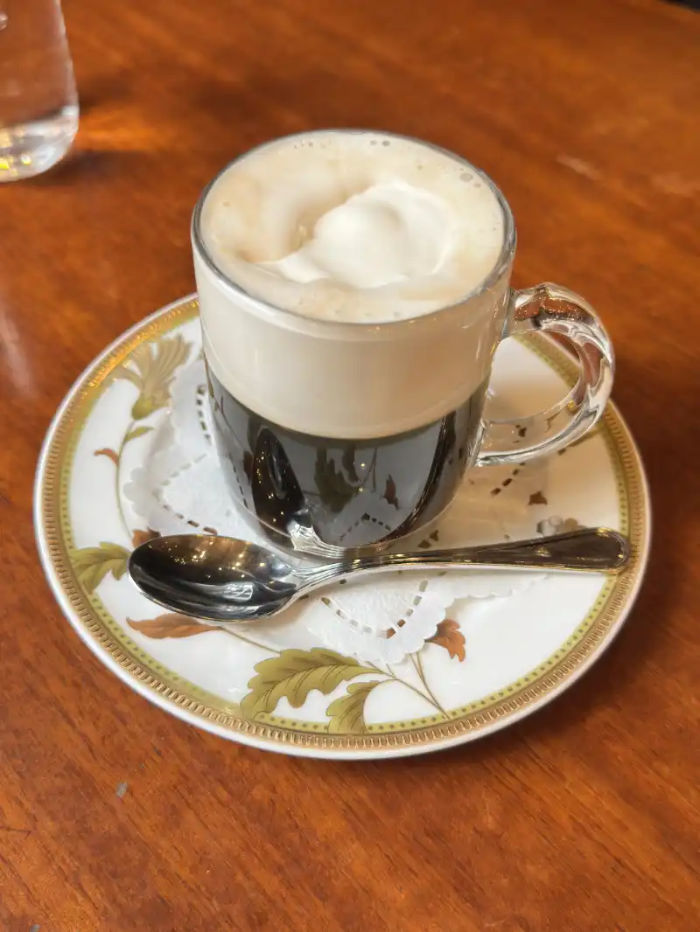
Vienna Coffee
My wife went for the Vienna Coffee. You may know that Austria has a long list of coffee specialties, but there is no Vienna Coffee among them. Outside of Austria, the term is generally used for coffee with whipped cream or what they call whipped cream. Instead of real whipped cream, very often you will be treated to something from a spray can. It may look a bit like whipped cream, but it's made from vegetable oils, has a greasy mouthfeel and is sweetened, Usually, you are in for a big disappointment, but not in Tricolore Café.
What you get here as "Vienna Coffee" would be called "Einspänner" in Austria. A strong coffee with a generous dollop of real whipped cream on top, not the disgusting spray can version. The whipped cream in this café is outstanding and reminded me of my childhood experience in Germany. Taste the whipped cream first before gently stirring. On the bottom of the glass is some coarse sugar, which will slowly dissolve and round the taste of this heavenly drink. It is not overly sweet, but if you prefer it without sugar, mention it when ordering.
Vienna Coffee aka Einspänner
Cointreau Coffee
This drink is also a classic Austrian coffee drink known in Austria as "Maria Theresia Kaffee", a favorite of the late Austrian Empress. It looks like the Einspänner above but is fortified with a shot of the French orange liqueur Cointreau. I first had this amazing drink in Business Class at Austrian Airlines and fell in love with it.
The Coffee Menu
Coffee Menu
Food choices
Beyond coffee, Tricolore Ginza offers a selection of mouth-watering cakes proudly displayed in a case near the entrance, where you can't overlook them. The chocolate cakes grabbed my attention in particular.
We just had lunch somewhere else, so we skipped those cakes for today, but friends told me that the cheesecake is creamy and just right in sweetness, while the apple pie is a perfect combination of flaky crust and tender fruit. It must be particularly good in autumn when the marvelous Japanese apples hit the market.
Other patrons had sandwiches and a crispy salad for lunch, which looked like an attractive option. For dessert, you could order one of the great cake selections to complete the perfect lunch in style.
Like many cafés in Japan, they have a Morning Menu, often called morning service. It includes a cup of Antique Blend, buttered toast, and salad.
Since the café closes at 7:00 pm, it is not a dinner destination.
My Verdict: Must-go
Whether a cup of coffee or a coffee preparation qualifies as a gourmet item depends on the quality of ingredients and the skill and method of preparation. The Tricolore Cafe excels on all levels.
That's why it became my instant favorite. It is also more than just a coffee shop; here, it's a place to take a break from the bustling Ginza area and relax for a while in a nostalgic atmosphere. Treat yourself to a cup of exceptional coffee and a delicious cake. Whether you're drawn by the charm of their Austrian style coffee preparations, the exotic flavor of Toarco Toraja coffee, or the distinctive taste of their Antique Blend, you will have one of the best coffee experiences in the center of Tokyo.
Practical Information for Visiting Tricolore Cafe Ginza
Location and Contact
It is very close to the main intersection of the Ginza district, which has the Mitsukoshi Department Store on one corner and the Wako jewelry store on another corner. In a quieter street parallel to the main drag of Ginza, you will find TricoloreCafé. You can't overlook the French flag in front of the building. From the outside, it may look like a fancy French restaurant, but when you step in, you will see it is a charming café on two floors.
The address is 5-9-17 Ginza, Chuo-ku, Tokyo. For reservations, you can call them at their telephone number, 03-3571-1811.
It's just a minute's walk from Ginza Station, which you can reach via the Ginza Line, Hibiya Line, or Marunouchi Line. If you're coming from Higashi-Ginza Station (Hibiya Line, Toei Asakusa Line), it's only a two-minute walk.
Opening Times
Their opening hours are:
Monday: 8:00 AM - 7:00 PM
Tuesday: Closed
Wednesday to Sunday: 8:00 AM - 7:00 PM
Reservation and Seating
There are 49 seats on two floors. Although not mandatory, making a reservation might be wise to avoid waiting, especially during peak hours. I've found that an early visit or a late afternoon stop is usually less crowded. On weekends, there will usually be a lot of visitors lining up.
Smoking
Since April 2020, the rules regarding smoking have changed in Tokyo. Smoking is generally not permitted indoors, with a few exceptions, to provide a comfortable environment for all guests and protect the staff.
Payment Options
All major credit cards in addition to cash and other payment systems like PayPay are accepted.
Camembert cheese is one of the most beloved symbols of French culinary tradition. This soft, creamy delight from Normandy is an important part of any decent cheese platter at the end of a classic French dinner.
But there is one particular type of cheese I prefer over any other: Camembert, made from spring milk. It is only available for a short time in spring and will surprise you with unique flavors. The fresh grass emerging after a long winter influences the milk's taste and aroma, resulting in a distinct profile and an exciting wildness.
Spring milk camembert is only available for about two to three months in spring, so I recommend looking for it in your favorite cheese store between March and June.
But there is a lot more to know about this kind of cheese. In this article, I will cover the story behind Camembert, its origins, and the various types. Knowing the differences will help you select the right one and develop a deeper appreciation for this remarkable cheese.
Compared to Italian Pecorino cheese and French Roquefort, which have histories of about 2,000 resp. 1,000 years, Camembert cheese is a recent addition to the table. Legend has it that Marie Harel, a farmer’s wife, created the first version in 1791, refining methods she learned from a priest in the Brie region. The cheese quickly gained popularity, especially during the Napoleonic era, when it was said to be a favorite of Napoleon III himself.
With its velvety texture and earthy, mushroom-like notes, Camembert is more than just a cheese—it has become a cultural icon.
Variations
There are several variations, but you may not be able to find all of them. Traditional camembert is made from raw milk, and you can get it when you are lucky enough to live in France or some countries in the EU. Many countries do not allow the import of it or impose restrictions like a minimum maturity of 60 days, which is already pretty close to the expiration date.
The alternative is camembert, made with pasteurized milk, readily available in better supermarkets.
Brie vs. Camembert
Both are great French cheeses. They look somewhat similar, but there are differences:
Origin: Camembert is made in Normandy, Brie in Isle de France
Flavor: Brie is milder due to higher fat content
Size: Brie is sold in larger wheels
Ripening: Brie ripens longer than Camembert
Why don't you try them side by side?
Traditional Camembert de Normandie
Normandie is a region in the northwest of France, blessed with a temperate oceanic climate and fertile pastures. The milk from Normande cows, a breed known for its rich milk with a high butterfat and protein content, is of exceptional quality.Camembert cheese is produced in several villages in the area, notably Camembert, which gave the name to this beloved cheese.
Camembert de Normandie holds the prestigious Appellation d’Origine Protégée (AOP) designation, a mark of authenticity that ensures the cheese is made according to time-honored traditions in this region. The AOP designation goes beyond branding; it guarantees authenticity and recognizes traditional artisan cheesemaking.
The fat content is typically 45% in the dry mass but can vary with the seasons.
The criteria to qualify for the AOP designation are:
Production must take place within the Normandy region.
Cheese must be made from raw milk derived from at least 50% Normande cows.
Traditional methods must be employed throughout production.
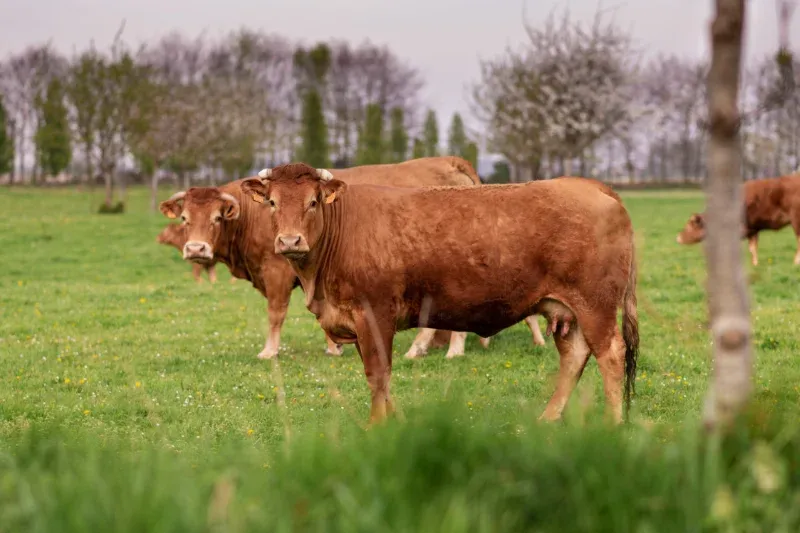
Happy Normandy cows producing spring milk
Common Camembert
Traditional camembert is difficult or impossible to get in many countries because of its raw milk content. However, cheese made from pasteurized milk is widely available. Pasteurization does impact its taste and flavor profile, but if you choose the product of a reputed company, you can still enjoy a great cheese to complement your dinner. Most better supermarkets will offer a reasonable choice.
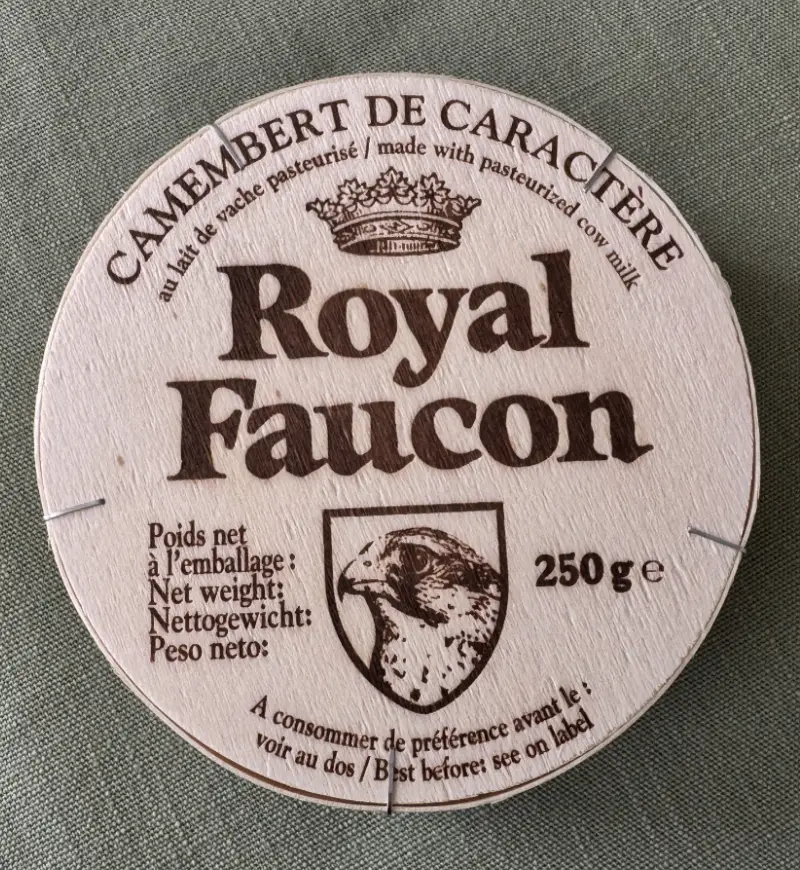
Among the good brands I can find in Tokyo are Camembert d'Isigny, Le Rustique, or Faucon.
Young Camembert offers a creamy texture with hints of sweetness. The flavor profile is earthy and mushroomy, and the texture is pleasantly creamy, especially in young Camembert, without being greasy at all. It doesn't match the complex flavors of raw milk, but it is still very satisfying.
Aged cheeses develop deeper, richer flavors with complex earthy undertones.
The fat content is similar to the traditional version, about 45% in the dry mass.
Regular Quality CamembertThe sticker indicates Spring Milk
Spring Milk Camembert
This is my absolute favorite for its outstanding taste. It is available only for a short time in spring each year.
Again, if you are outside of Europe, the raw milk version will remain a dream for you. But I found the spring milk camembert made by Le Rustique very pleasing, even though it is made from pasteurized milk.
Spring milk is produced during the lush, green spring months when pastures are abundant with fresh grass, and cows are happy to go outside again after the winter. This seasonal milk is creamier and has a sweeter, more vibrant taste due to the diverse flora of spring. It has a higher nutritional content and is richer in beta-carotene, which does affect color and taste.
The result is a cheese with a creamy texture and a unique flavor profile that reflects the vibrancy of spring itself.
A very ripe Spring Milk Camembert on my table. That's the way I like it.
Triple Cream Camembert
Triple cream Camembert is a richer version because of added cream, boasting around 75% fat content compared to traditional Camembert’s 45%. It may sound enticing but it is not an authentic representation of this beloved French cheese.
This variation is popular in the US and often the only one you can find in supermarkets.
Frankly, I do not like it. I find that the greasiness masks the delicate flavors characteristic of traditional Camembert. The flavors become too subdued, even to the extent of being boring. And the excessive greasiness lingers on your palate and blocks any further taste sensations.
Baked Camembert
Baking or frying camembert may be a reasonable way to deal with cheese you must get rid of as it is past its expiration date. It's a reasonable way to use triple cream camembert, which you may have bought by mistake. Don't treat a quality cheese with so much disrespect: It's a culinary sin.
The result looks like this, which I find most unappetizing:
How Camembert is made
The production process for all types of camembert is basically the same, except that traditional camembert requires the use of raw milk.
Raw cow’s milk is gently heated to the optimal temperature, ensuring beneficial bacteria can thrive.
Specific cultures are added to the milk, which is crucial for developing the unique flavors characteristic of Camembert.
Rennet, an enzyme, is added, causing the milk to curdle.
The curds are placed into molds, allowing them to drain the whey naturally. This step shapes the cheese into wheels and begins its journey toward becoming Camembert.
After draining, the cheese is salted to enhance flavor and act as a preservative.
The cheese is transferred to humidity-controlled caves, where it undergoes a ripening process that lasts for at least 21 days. During this time, it develops its characteristic distinctive bloomy rind and complex flavors.
The traditional method allows for greater microbial diversity during aging, resulting in a more nuanced flavor profile.
How to Enjoy Camembert
To truly appreciate traditional Camembert, serve it at room temperature. It will melt in your mouth, allowing its flavors to blossom fully.
The aroma is earthy and slightly pungent, with hints of mushrooms and slightly nutty tones. On the palate, it offers a complex interplay of flavors with a finish that evokes the terroir of Normandy.
Don't be afraid to eat the rind. The white, bloomy rind is generated by a fungus (penicillium camemberti). It is edible and enhances the tasting experience by adding textural contrast.
Food Pairings
Here are a few common suggestions by foodies you may want to experiment with:
Cured Meats: Prosciutto or salami can add a savory kick that compliments the soft, buttery texture of your Camembert.
Fruits: Fresh berries or slices of ripe pear bring a touch of sweetness that can elevate the cheese's floral notes.
Honey or Jam: A drizzle of honey or a smear of fig jam adds sweetness.
Nuts: Roasted hazelnuts or pistachios add a crunch and a pleasant bitterness to balance the creaminess.
I pass on these recommendations as I do not see the need to pair a good camembert with anything except with some bit of a crusty baguette. The only acceptable excuse for adding other items would be that the cheese is already beyond its prime and needs some pepping up.
Beverage Pairings
You may often hear the recommendation to pair with Champagne or a dry white wine. There are good arguments for that. The champagne bubbles cut through the richness, enhancing each bite. There is nothing wrong with that if you have just a camembert dinner. I would also add Orange wine as an option, which has a bit more body and earthy flavor to match.
But you probably have your cheese at the end of a meal, not just one kind of cheese but hopefully a gorgeous cheese platter. You will most likely have had a nice red wine during the meal and before the cheese is served. And now you want to change to Champagne or white wine? Come on, be realistic. Just stay with the wine you are drinking.
Storing and Caring for Camembert
Camembert is sold wrapped in wax paper and often in a wooden box, made from thin wooden sheets. This packaging is designed to keep the cheese in its best condition. Keep it that way until you use it.
Be aware that Camembert is alive and will continue to mature even after you buy it. It is therefore essential to check the expiration date on the package. Store it in a cool but not too cold place. The regular fridge may be too cold; that's why I prefer to store soft cheeses in the vegetable compartment of the fridge. Too cold and a good camembert will die.
Since Triple cream camembert has a lot less life in it, you can safely put it in the fridge.
Fresh Camembert, especially the spring milk version, emits a strong smell that can affect everything else in your fridge. A cheese dome is a good solution to prevent that.
Camembert has a relatively short shelf life—typically 1 to 2 weeks after purchase. Signs that it’s past its prime include an overly pungent ammonia smell, a hardened or darkened rind, or red or brown spots on the rind. A paste that has become too runny is not necessarily a concern; it's part of maturing and I like the gooey consistency. When in doubt, trust your senses.
Once in a while, I enjoy a typical American breakfast with all the trimmings: bacon, sausage, fried eggs, and the works. But I can’t do it more than twice a week, and it’s a guilt trip. I don’t want to head into the land of obesity, and my palate craves a bit more variety.
Several years ago, on one of my first trips to New York, a Jewish friend who lives next to Central Park invited me for Sunday Brunch at Barney Greengrass (541 Amsterdam Avenue at 86th Street). This is where I had the first lox bagel in my life, and I was immediately sold.
This feeling was reinforced with my second lox bagel experience, which I had at the Knickerbocker Hotel in Chicago, different style of serving but also an outstanding culinary sensation. It had a different presentation but the same ingredients.
The effect on my taste buds was the same: an incredible harmony of the various components.
Since then, lox bagel has become my go-to breakfast whenever I travel to the US.
What is a Lox Bagel?
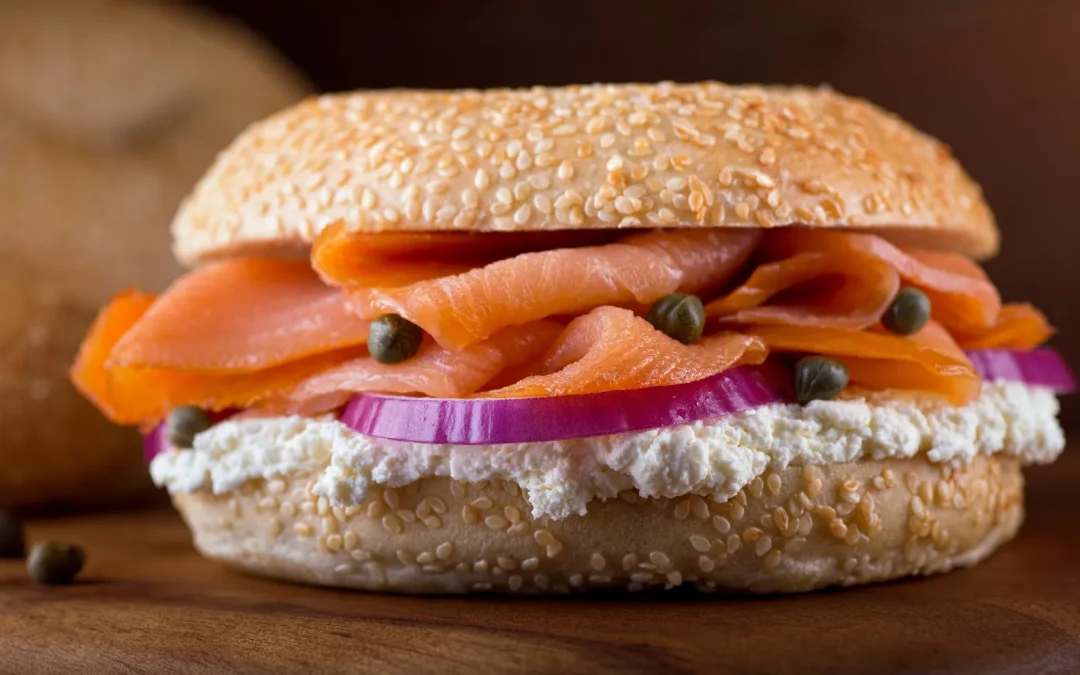
A lox bagel is a sandwich, centering on smoked salmon, served either closed or open-faced. It's an ideal breakfast that will keep you satiated through the morning. It's also great for brunch.
The list of ingredients reads deceptively simple, and you may underestimate the gourmet potential:
a toasted bagel
cream cheese
smoked salmon, often under the name Nova Lox
a slice of tomato
a slice of red onion
capers
That’s the way I like it best.
Some restaurants add dill or basil leaves. Other additions I have seen are cucumbers, avocado, pickles, and lemons. I like these herbs and veggies, but I don’t want them on a lox bagel. They add an unnecessary level of flavors that distract from the harmony of the main ingredients.
What You Need to Makea Lox Bagel at Home
For the perfect lox bagel, no particular cooking skills are required, and you can easily make it yourself at home. You don't even need a recipe.
Well, the only skill necessary is cutting the bagel horizontally into two halves and toasting it to the ideal light brown color while keeping the chewy interior intact.
But the big challenge to creating a breakfast masterpiece is to get your hands on the best possible ingredients, as the quality of the lox bagel hinges on the quality of its components and their synergy:
Bagel
The greatest challenge is probably getting fresh bagels. You are in luck if you have a decent Jewish bakery in your area. Bagels in a vinyl bag that you find on the shelf of your local supermarket won't do it. If that's all you can get, you should look for another breakfast item. Forget lox bagel. Supermarket bagels usually lack flavor and have an unsatisfying mouthfeel. They are made with ingredients to enhance their shelf life. You don't want to ingest those.
I prefer an onion or everything bagel. Plain, sesame, and poppy seeds will also work, but they would only be my second choice. Needless to say, stay clear of a blueberry bagel. This would be a terrible choice.
Salmon
The centerpiece is, of course, the lox. On a restaurant menu, you may find the terms lox, Nova Lox, or smoked salmon. The terminology may be a bit confusing, so let me explain the background.
In the 1930s, the lox bagel was created in New York, in the community of Jewish immigrants. At that time, they used salmon belly from Pacific salmon, brined and cured with salt, but not smoked. Because of the long transport and lack of reliable refrigeration, a lot of salt was used. The salmon was so salty that you could eat it only in combination with something else. Cream cheese proved to be ideal to cushion the saltiness.
The saltiness of the original lox makes it less popular these days, not least for health reasons. It is almost always replaced with cold-smoked salmon, but the term lox still appears on menus.
Nova Lox, on some menus shortened to just Nova is salmon from Nova Scotia. The salmon sides are only lightly cured and then cold-smoked at a temperature of below 75º F for several hours. It is far less salty than the original version and has a light and pleasant smoke flavor, which varies according to the wood used for smoking.
In recent years, smoked salmon is often imported from Chile and Argentina. It is farm-raised, of very reliable quality, and reasonably priced. I found decent products at Sam's Club and Costco.
Cream cheese
Spread both halves of the bagel generously with plain cream cheese. This is a solid base to add the toppings. I’m not a fan of cream cheese at all, and I don’t consider it to be real cheese. But in this combination, it works nicely. Cream cheese comes in different shades of quality. The original Philadelphia cream cheese is a good and reliable choice. Stick to the plain version and avoid flavored versions. Another excellent brand is the French Kiri cream cheese, which you may find in better supermarkets. I like it even more than the Philadelphia.
Fun Fact: Kiri is the phonetic shortcut from the original French brand name which was "La vache qui rit", meaning the laughing cow.
Fun Fact: Kiri is the phonetic shortcut from the original French brand name, "La vache qui rit", meaning the laughing cow.
Onion
Onions and salmon go very well together. They add a certain bite to the composition. The sharpness of the onion is tamed by the fat content of the salmon and cream cheese. However, the wrong choice of onion can ruin your experience. Since you are using a raw onion slice, your best choice is between white and red onions. They are milder than yellow onions. Because of their visual appeal, I prefer red onions.
Add onion according to your taste. Depending on the level of sharpness you may use just a few onion rings instead of a whole slice.
Tomato
A slice of tomato adds juiciness and a slightly tart note, creating a pleasant balance between the fatty salmon and cream cheese. The best choice is the steak tomato. It is solid and meaty and does not produce too much juice which could create a soggy mess of your sandwich. I prefer it on top of the onion slice because it is softer and won't be crushed by the harder onion,
Capers
Capers are the flower buds of the caper bush (Capparis spinosa), and are grown around the Mediterranean Sea. Main producers are Spain, Italy, Greece, and Morocco.
You find capers as a typical ingredient in many Mediterranean dishes such as pizza, spaghetti Puttanesca, and many seafood dishes. They are also a perfect accompaniment to smoked salmon and tomatoes.
They are sold in little glass jars, usually in brine or vinegar. Both versions are good to go with your creation, just be sure to drain them before use. They are a neat garnish and complement the other ingredients with another level of complexity in taste.
When you shop for capers, look out for the word "non pareil". This label means that they are less than 7mm in diameter. But keep looking for even smaller ones, they have a more delicate texture and a more intense flavor.
What is the Best Layering Order?
One thing is sure: the cream cheese goes first, and the salmon goes on top. Between those two it all depends on your preference and practical considerations. In terms of taste, it does not really matter.
I like to put the onion first on the cream cheese and then the tomato. That way, the softer tomato wouldn’t be crushed. Then comes the salmon on top.
But where to put the capers? The ideal position would be on top of the salmon. That works fine when putting the other half of the bagel on top. That way, the capers will not roll all over your breakfast table. If you prefer your Nova Scotia lox bagel as an open sandwich, plant the capers between the tomato and the salmon to keep them in place. Tastewise, this is better than fixing the capers in the cream cheese.